Jump To Section
- What Causes Dark Circles Under Eyes?
- How Retinol Eye Cream Works
- How Vitamin C Eye Cream Works
- Comparing Retinol And Vitamin C For Dark Circles
- Choosing The Right Eye Cream For You
- Application Tips For Maximum Results
- Common Mistakes To Avoid
- How To Read The Label
- Are There Studies To Support These Ingredients?
- Frequently Asked Questions
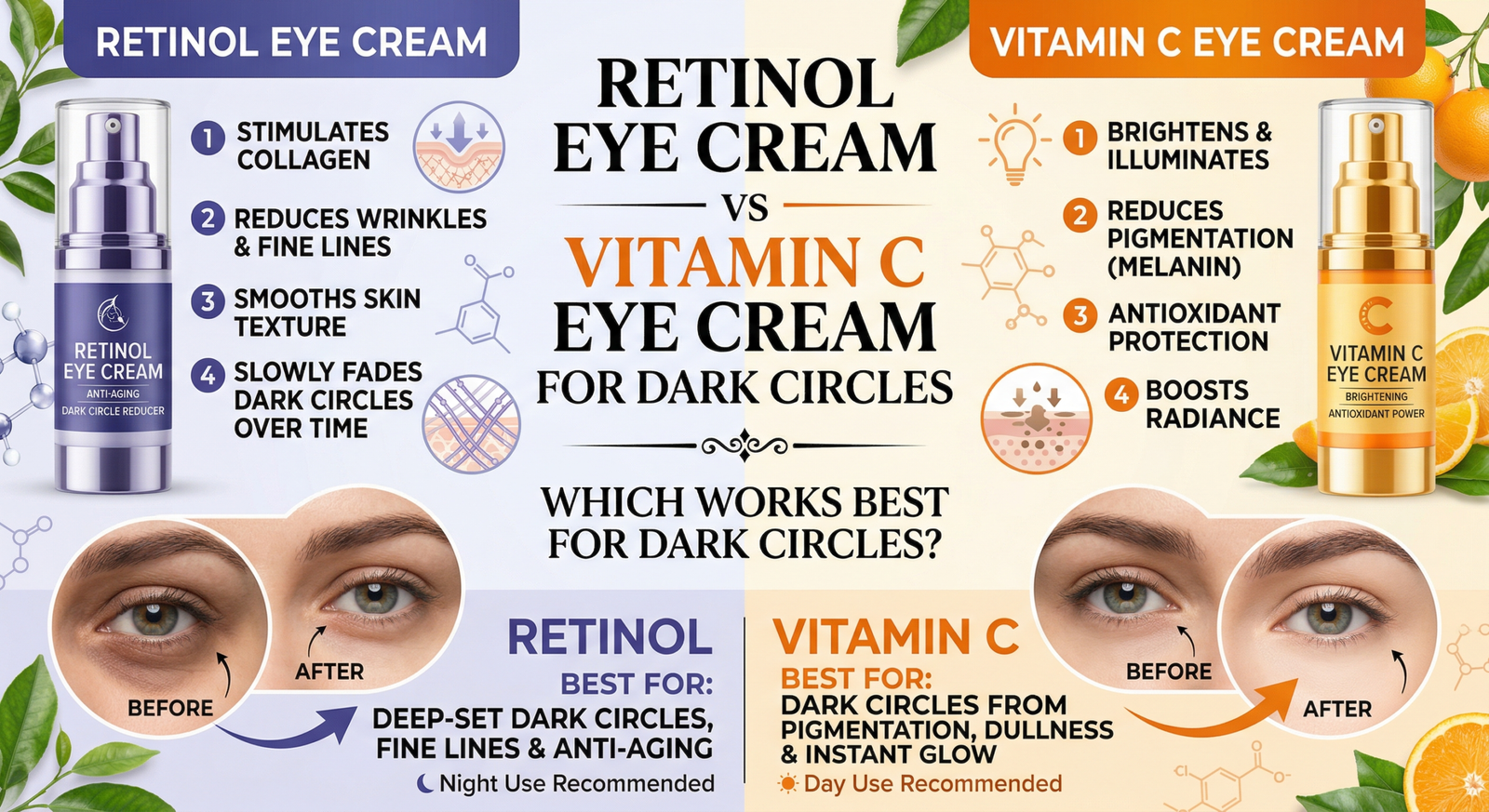
Are you struggling with dark circles under your eyes? You’re not alone. Many people look for eye creams to help with tired, shadowed under-eyes. Two of the most popular ingredients in eye creams today are retinol and vitamin C. But which one is better for dark circles? And how do they really work? This article breaks down the science, benefits, and key differences, so you can choose the best solution for your needs.
What Causes Dark Circles Under Eyes?
Before choosing the right eye cream, it’s important to know why dark circles appear. Some of the main reasons include:
- Thin skin under the eyes, making blood vessels more visible
- Genetics, which can make dark circles more likely
- Lack of sleep or poor rest
- Allergies and rubbing eyes often
- Aging, which leads to loss of fat and collagen
- Sun exposure, causing pigment changes
Different causes may respond better to different treatments. That’s why understanding your own skin is the first step.
How Retinol Eye Cream Works
Retinol is a type of vitamin A that dermatologists often recommend for aging skin. It boosts cell turnover, which means your skin replaces old cells with new ones faster.
Benefits For Dark Circles
- Thicker skin: Retinol helps produce more collagen, making the under-eye skin thicker. Thicker skin can hide the dark blood vessels that cause shadows.
- Smoother texture: Fine lines and wrinkles can make dark circles look worse. Retinol smooths these out over time.
- Pigment fading: Some dark circles are caused by extra pigment. Retinol can help fade this pigment with regular use.
Key Facts About Retinol
- Results usually appear after 8–12 weeks of regular use.
- It can be irritating, especially for sensitive skin.
- It is best applied at night, as sunlight can make it less effective.
- Always use sunscreen in the morning when using retinol.
Many beginners don’t realize that starting with too strong a retinol cream can cause redness or dryness. It’s better to start with a lower concentration (like 0.1% or 0.3%) and use it 2–3 times a week at first.
How Vitamin C Eye Cream Works
Vitamin C is a powerful antioxidant. It protects the skin from damage and helps even out skin tone.
Benefits For Dark Circles
- Brightening effect: Vitamin C blocks the process that creates extra pigment, so the area looks lighter.
- Boosts collagen: Like retinol, vitamin C also helps build collagen, which can make the under-eye area look firmer.
- Reduces free radicals: It protects your skin from pollution and sun damage, both of which can make circles worse.
Key Facts About Vitamin C
- Suitable for most skin types, including sensitive skin.
- Can be used in the morning or evening.
- Works well with sunscreen to protect against further darkening.
One thing many people miss: vitamin C is unstable and can lose its power if the cream is exposed to light or air. Always choose eye creams in opaque, air-tight packaging to get the best results.
Comparing Retinol And Vitamin C For Dark Circles
To help you see the differences, here’s a side-by-side look:
| Feature | Retinol Eye Cream | Vitamin C Eye Cream |
|---|---|---|
| Main Benefit | Thickens skin, reduces wrinkles | Brightens skin, reduces pigment |
| Best for | Thin, aging skin with shadows | Pigmented, dull under-eyes |
| Common Side Effect | Dryness, irritation | Mild stinging (rare) |
| When to Apply | Night | Morning or night |
| Visible Results | 8–12 weeks | 4–8 weeks |
Main Benefit
Best for
Common Side Effect
When to Apply
Visible Results

Credit: www.innbeautyproject.com
Choosing The Right Eye Cream For You
Deciding between retinol and vitamin C depends on your main concern.
When To Choose Retinol
- You see fine lines and thinning skin under your eyes.
- Your dark circles look worse with age.
- You want longer-term anti-aging benefits.
When To Choose Vitamin C
- Your main issue is brownish or gray under-eye pigment.
- You have sensitive skin that gets red easily.
- You want to brighten and protect your skin every day.
Some people see the best results by combining both in their routine, but not at the same time. For example, use vitamin C in the morning and retinol at night.
Application Tips For Maximum Results
Getting the best from your eye cream means more than just choosing the right one. Here’s how to apply them correctly:
- Cleanse gently before application—never rub.
- Use a small amount (about a grain of rice for both eyes).
- Pat, don’t rub the cream into the skin.
- Apply sunscreen every morning, especially if you use retinol.
- Be patient—dark circles take weeks to improve.
Many users expect instant results, but this isn’t realistic. Consistency and gentle care are key to seeing lasting changes.


Credit: www.rocskincare.com
Common Mistakes To Avoid
- Overusing retinol: Too much can cause peeling and make eyes look worse.
- Skipping sunscreen: Both ingredients make skin more sensitive to sun.
- Using on broken skin: Never apply to irritated or broken under-eye skin.
- Ignoring allergies: If you get redness, itching, or swelling, stop use and consult a dermatologist.
Another insight: Not all dark circles will respond to creams. If your circles are genetic or caused by deep blood vessels, you may need professional treatments.
How To Read The Label
Not every eye cream is created equal. Look for these on the packaging:
- For retinol: Retinol, retinyl palmitate, or retinaldehyde
- For vitamin C: Ascorbic acid, magnesium ascorbyl phosphate, or sodium ascorbyl phosphate
Avoid creams with added fragrance or alcohol, as these can irritate the thin skin around your eyes.
Are There Studies To Support These Ingredients?
Yes, both ingredients are backed by research. Studies show that retinol can improve fine wrinkles and thicken skin with regular use. Vitamin C has been proven to brighten and reduce pigment in the skin.
For more in-depth scientific background, visit this resource: National Institutes of Health.
Frequently Asked Questions
Can I Use Retinol And Vitamin C Eye Creams Together?
Yes, but not at the same time. Use vitamin C in the morning and retinol at night for best results. This reduces irritation and maximizes benefits.
Which Is Better For Sensitive Skin: Retinol Or Vitamin C?
Vitamin C is usually gentler. If you have very sensitive skin, start with a low-strength vitamin C eye cream and patch test first.
How Long Does It Take To See Results?
Most people see changes after 4 to 12 weeks. Retinol may take a bit longer. Patience and daily use are important.
Are There Any Risks To Using These Creams?
Possible side effects include redness, dryness, or mild stinging. Avoid using on broken skin, and always use sunscreen in the morning.
What If My Dark Circles Don’t Improve?
If you see no change after three months, your dark circles may be due to genetics or blood vessels. Consult a dermatologist for other options like laser or fillers.
Finding the right eye cream takes a bit of trial and error. Both retinol and vitamin C have strong science behind them. By understanding your skin’s needs, reading ingredient lists, and using creams consistently, you’ll have the best chance of brighter, more refreshed under-eyes.

Credit: www.rocskincare.com