Jump To Section
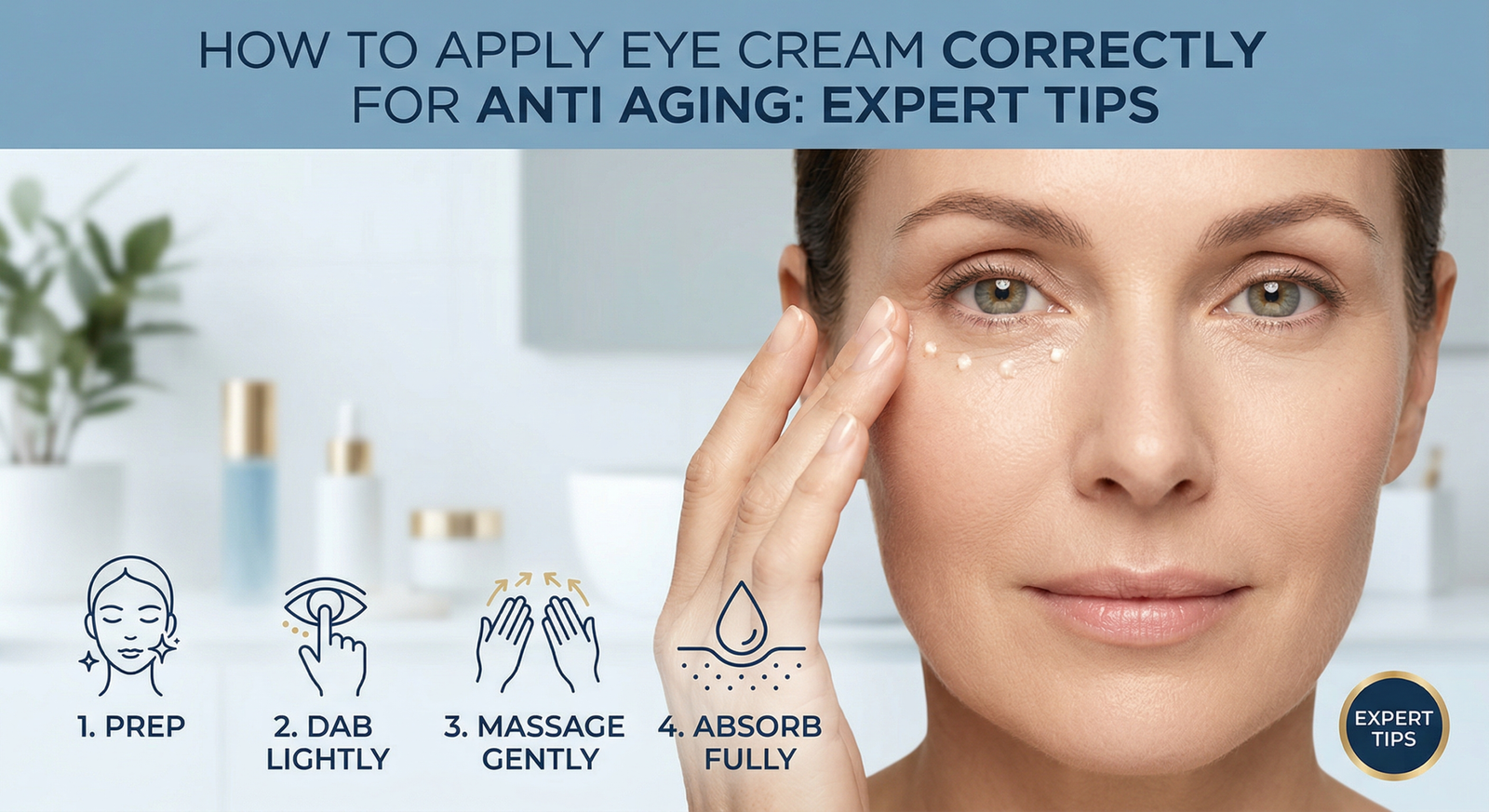
Applying eye cream may seem simple, but if you want real anti-aging results, technique matters. The skin around the eyes is thin and delicate, which makes it more likely to show early signs of aging like fine lines, puffiness, and dark circles.
Many people invest in expensive eye creams but never see improvements because they use them incorrectly. Knowing how to apply eye cream correctly can help you get the most from your product—and protect your eyes from unnecessary irritation.
Why Eye Cream Application Matters
The area around your eyes has fewer oil glands and thinner skin than the rest of your face. This means it’s more prone to dryness, wrinkles, and sensitivity. Eye creams are made with lighter textures and targeted ingredients to address these problems, but using too much or applying it the wrong way can cause issues like milia (small white bumps), irritation, or even worsen puffiness. Proper application ensures the active ingredients reach where they’re needed and work effectively.
Choosing The Right Eye Cream
Not all eye creams are the same. The best formula for you depends on your main concern:
| Main Concern | Key Ingredients | Texture to Choose |
|---|---|---|
| Fine lines & wrinkles | Retinol, peptides, hyaluronic acid | Light cream or gel |
| Puffiness | Caffeine, green tea extract | Cooling gel |
| Dark circles | Vitamin C, niacinamide | Brightening cream |
| Dryness | Ceramides, squalane | Richer cream |
Fine lines & wrinkles
Puffiness
Dark circles
Dryness
Pro tip: Always patch-test a new eye cream on your wrist to check for irritation before using it near your eyes.
How To Apply Eye Cream Step By Step
Getting the technique right is more important than the brand you use. Here’s how to apply eye cream for the best anti-aging results:
- Cleanse Gently: Start with a clean face. Use a mild, non-stripping cleanser. Pat your skin dry with a soft towel.
- Apply Toner or Serum: If you use a toner or face serum, apply those first. Wait for them to absorb before the next step.
- Dispense the Right Amount: You only need a small amount—about the size of a grain of rice for each eye. Too much product can cause milia or puffiness.
- Use Your Ring Finger: The ring finger applies the least pressure, which is safer for delicate skin.
- Dot the Cream: Place small dots of cream under the eye, starting from the inner corner and moving outward. Do not apply too close to the lash line.
- Pat, Don’t Rub: Gently tap the cream into your skin using your ring finger. Avoid dragging or rubbing, which can stretch and damage the skin.
- Go Around the Eye: Extend the cream around the orbital bone (the bone that circles your eye socket), including the brow bone but not the eyelid unless the product says it’s safe.
- Wait Before Layering: Let the cream absorb for 1-2 minutes before applying moisturizer or makeup.
| Common Mistake | Correct Method |
|---|---|
| Rubbing cream in circles | Patting gently with ring finger |
| Using too much product | Rice-sized amount per eye |
| Applying on eyelids (if not specified) | Apply only around orbital bone |
Rubbing cream in circles
Using too much product
Applying on eyelids (if not specified)
Insider tip: If you want to target crow’s feet (lines at the outer corners), gently tap the cream in that area too.
When To Apply Eye Cream In Your Routine
Order matters in skincare. Eye cream should be applied after cleansing and toning, but before moisturizer and sunscreen. If you use multiple serums, apply water-based serums first, then your eye cream, then heavier creams.
Morning vs. Night:
- In the morning, choose an eye cream with antioxidants or SPF to protect against sun damage.
- At night, use a cream with retinol or peptides to help repair skin.

Credit: elline-switzerland.com
Anti-aging Eye Cream: Myths Vs. Facts
Many believe that more expensive eye creams work better or that you must see instant results. Here are some truths:
- Fact: Consistency is more important than price. Using eye cream daily makes a bigger difference than buying the most expensive brand.
- Myth: You should see results in one week. Most anti-aging ingredients take 4-8 weeks to show visible changes.
- Fact: Using sunscreen around the eyes (with care) is just as important as eye cream for preventing aging.
Common Mistakes To Avoid
Even with a good product, some habits can hold you back. Watch out for these:
- Applying on Wet Skin: Wait for your skin to dry after cleansing. Wet skin can dilute the product and cause it to move into the eyes.
- Getting Product in the Eyes: This can cause stinging or watering. Stay on the bone, not the eyelid.
- Skipping Sunscreen: Sun damage causes most wrinkles. Always finish your routine with SPF during the day.
- Switching Products Too Often: Give new products time to work before changing.
- Neglecting the Upper Eye Area: The brow bone also ages—apply cream there gently.

Credit: www.nasola.com
How Eye Cream Ingredients Work
Some key ingredients you’ll find in anti-aging eye creams include:
- Retinol: Boosts collagen and smooths fine lines. Use at night and start slowly to avoid irritation.
- Peptides: Help skin repair and stay firm.
- Hyaluronic Acid: Attracts moisture, plumping up thin or crepey skin.
- Caffeine: Reduces puffiness by narrowing blood vessels.
- Vitamin C: Brightens dark circles and fights free radical damage.
Look for products with these ingredients, but remember that results come with time and regular use.
Realistic Results: What To Expect
Eye creams are not magic, but they do help when used correctly. In one clinical study, 70% of users saw smoother skin after 6 weeks of using a retinol eye cream. Most people notice better hydration, less puffiness, and softer lines with daily use.
However, genetics and lifestyle also affect aging. Good sleep, less screen time, and wearing sunglasses can help your eyes look younger.
For more on ingredients and studies, visit the American Academy of Dermatology.

Credit: www.kiehls.com
Frequently Asked Questions
How Much Eye Cream Should I Use Each Time?
A tiny amount is enough—about the size of a grain of rice per eye. More cream does not mean better results and can lead to irritation.
Can I Use Regular Face Moisturizer Instead Of Eye Cream?
Face creams are usually heavier and may contain ingredients that are too strong for the eye area. Eye creams are made for sensitive skin and are safer for daily use around the eyes.
When Will I See Results From Using Eye Cream?
Most people need 4-8 weeks of regular use to see visible results like fewer lines or less puffiness. Some hydrating creams may show quick improvement in dryness.
Should I Use Eye Cream In The Morning Or At Night?
Both. Use a lighter, protective formula in the morning and a repairing or richer cream at night for best anti-aging benefits.
Is It Safe To Use Eye Cream On My Eyelids?
Not always. Only use eye cream on eyelids if the product label says it is safe. Most creams are meant for the area around the eyes, not directly on the lids.
Applying eye cream the right way is a small habit that can make a big difference in your anti-aging routine. With the correct technique, patience, and the right product, you can help your eyes look brighter, smoother, and younger for years to come.