Jump To Section
Bakuchiol Vs Retinol: Which Is Better For Your Skin?
If you care about skincare, you probably know about retinol. It’s praised for anti-aging and clearing the skin. But many people find it harsh, causing redness or irritation. Now, a new ingredient, bakuchiol, is making headlines as a “natural alternative.” But is bakuchiol really as good as retinol? Or is it just hype? This guide will help you understand the differences, benefits, side effects, and how to choose the right one for your skin.
What Is Retinol?
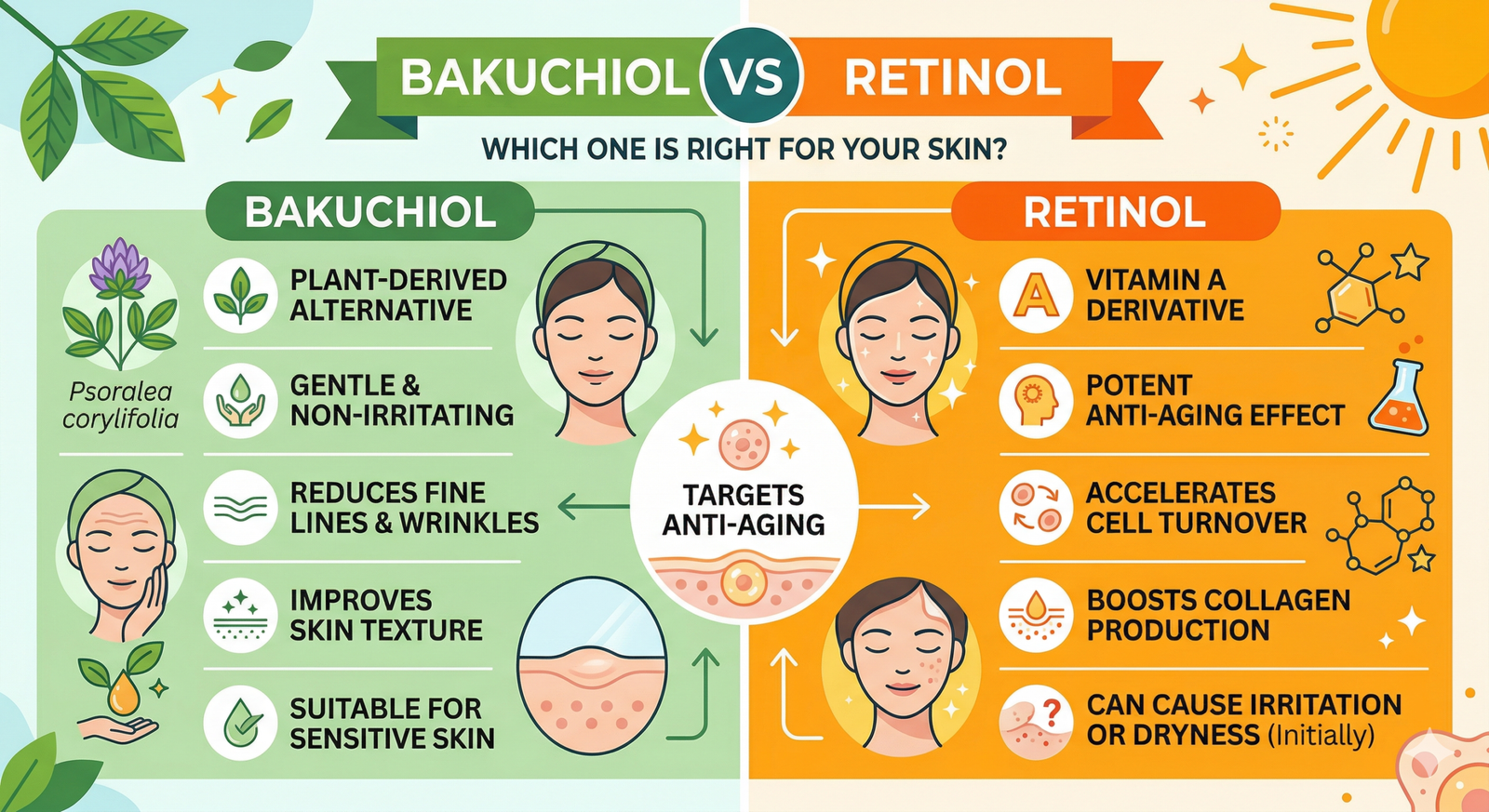
Retinol is a type of vitamin A. For decades, dermatologists have used it to treat acne, wrinkles, and uneven skin tone. It works by increasing cell turnover, which means it helps your skin shed old cells and grow new ones faster.
Studies show that using retinol can reduce wrinkles by up to 44% after 12 weeks. It also boosts collagen production, making your skin firmer and smoother. However, it’s strong—many people experience redness, peeling, or dryness, especially in the first few weeks.
What Is Bakuchiol?
Bakuchiol comes from the seeds of the Psoralea corylifolia plant, used in traditional Chinese and Indian medicine. It’s a plant-based compound that’s often called “botanical retinol.” Bakuchiol does not have the same chemical structure as retinol, but it acts on the skin in similar ways.
In a 2018 clinical study, bakuchiol was found to reduce lines and pigmentation with fewer side effects compared to retinol. It’s gentle, making it popular for people with sensitive skin.
How Do They Work?
Both retinol and bakuchiol trigger the skin to renew itself, but their methods are slightly different.
| Ingredient | Main Action | Results |
|---|---|---|
| Retinol | Speeds up cell turnover, boosts collagen | Reduces wrinkles, brightens skin, treats acne |
| Bakuchiol | Activates collagen production, antioxidant | Reduces fine lines, evens out skin tone |
Retinol
Bakuchiol
Retinol binds to retinoid receptors in your skin. This changes how your skin grows and repairs itself. Bakuchiol works as an antioxidant and also increases collagen, but it does not attach to the same receptors. Still, research shows the end results are very similar.
Benefits Comparison
It’s important to see what each ingredient offers.
Retinol
- Reduces wrinkles: Retinol is proven to smooth lines and wrinkles.
- Clears acne: It unclogs pores, reduces breakouts, and fades acne marks.
- Fades dark spots: Helps lighten age spots and sun damage.
- Improves texture: Makes rough skin softer and more even.
Bakuchiol
- Gentle on skin: Causes less irritation, even on sensitive skin.
- Evens skin tone: Fades dark spots and helps with pigmentation.
- Anti-inflammatory: Reduces redness and calms the skin.
- Safe for daytime: Bakuchiol does not make skin more sensitive to sunlight.
Side Effects: What To Expect
Many people avoid retinol because of side effects. Let’s compare them side by side.
| Side Effect | Retinol | Bakuchiol |
|---|---|---|
| Redness | Common | Rare |
| Peeling | Common | Uncommon |
| Dryness | Common | Rare |
| Sun Sensitivity | Yes | No |
Redness
Peeling
Dryness
Sun Sensitivity
Retinol often causes a “purge” period—skin might get worse before it gets better. This scares many first-time users. Bakuchiol is much gentler and rarely causes dryness or redness.
Which One Is Right For You?
Choosing between bakuchiol and retinol depends on your skin’s needs and lifestyle.
- If you have sensitive skin or have had trouble with retinol before, bakuchiol is a great choice.
- If you want fast and powerful results for wrinkles or acne, and your skin can handle it, retinol is the gold standard.
- If you’re pregnant or breastfeeding, avoid retinol; bakuchiol is considered safer (but always check with your doctor).
One detail many beginners miss: bakuchiol can be used both morning and night because it does not increase sun sensitivity. Retinol should only be used at night and always with sunscreen during the day.
Can You Use Them Together?
Yes, some advanced users combine bakuchiol and retinol to get benefits from both. However, this should be done carefully. Start slowly and watch your skin’s reaction. Some dermatologists recommend alternating—retinol at night, bakuchiol in the morning.
A common mistake: using too many active ingredients at once. This can overwhelm your skin, leading to irritation. Always add new products one at a time.
Cost And Availability
Here’s a quick overview of how they compare in terms of price and where to find them.
| Product Type | Average Price (USD) | Availability |
|---|---|---|
| Retinol Serum | $15–$80 | Widely available, many brands |
| Bakuchiol Serum | $20–$90 | Mostly online, fewer brands |
Retinol Serum
Bakuchiol Serum
Bakuchiol is newer and usually a bit more expensive. Retinol comes in many strengths and types, from drugstore to high-end.
Real-life Examples And Tips
Let’s look at how people use these ingredients:
- Anna, 32, switched from retinol to bakuchiol after experiencing peeling and redness. After 2 months, her skin tone evened out with no irritation.
- David, 41, uses retinol three nights a week for wrinkles. He uses a moisturizer after to avoid dryness.
Tip: Always start slow. For retinol, begin with twice a week, then increase. For bakuchiol, daily use is usually safe.
Another insight: don’t expect overnight results. Both ingredients take 6 to 12 weeks for visible changes. Consistency is more important than using a high dose.
Frequently Asked Questions
Is Bakuchiol As Effective As Retinol?
Research shows that bakuchiol can give similar anti-aging results to retinol, especially for fine lines and pigmentation. However, retinol may still be better for severe acne.
Can Bakuchiol Replace Retinol Completely?
For many people, yes. Bakuchiol is a great alternative if you want gentler care. But if your skin can handle retinol and you need strong results, stick with retinol.
Is Bakuchiol Safe For All Skin Types?
Yes, bakuchiol is usually safe for sensitive, oily, dry, and combination skin. Always do a patch test first to be sure.
How Long Does It Take To See Results?
Most people see changes in 6 to 12 weeks with both ingredients. It’s important to use them regularly and not to expect fast results.
Where Can I Find More Scientific Information?
You can find more studies and details at the National Institutes of Health website.
Bakuchiol and retinol both have impressive results for better skin, but your choice should fit your skin’s needs and comfort. Listen to your skin, start slowly, and use sun protection for best results. The right ingredient can make a real difference in your confidence and skin health.