Jump To Section
- What Is Witch Hazel?
- Common Uses Of Witch Hazel
- Is Witch Hazel Safe For Skin?
- Witch Hazel Safety For Specific Groups
- Comparing Witch Hazel To Other Skin Products
- Scientific Evidence And Research
- How To Use Witch Hazel Safely
- Non-obvious Insights About Witch Hazel
- Frequently Asked Questions
- Final Thoughts
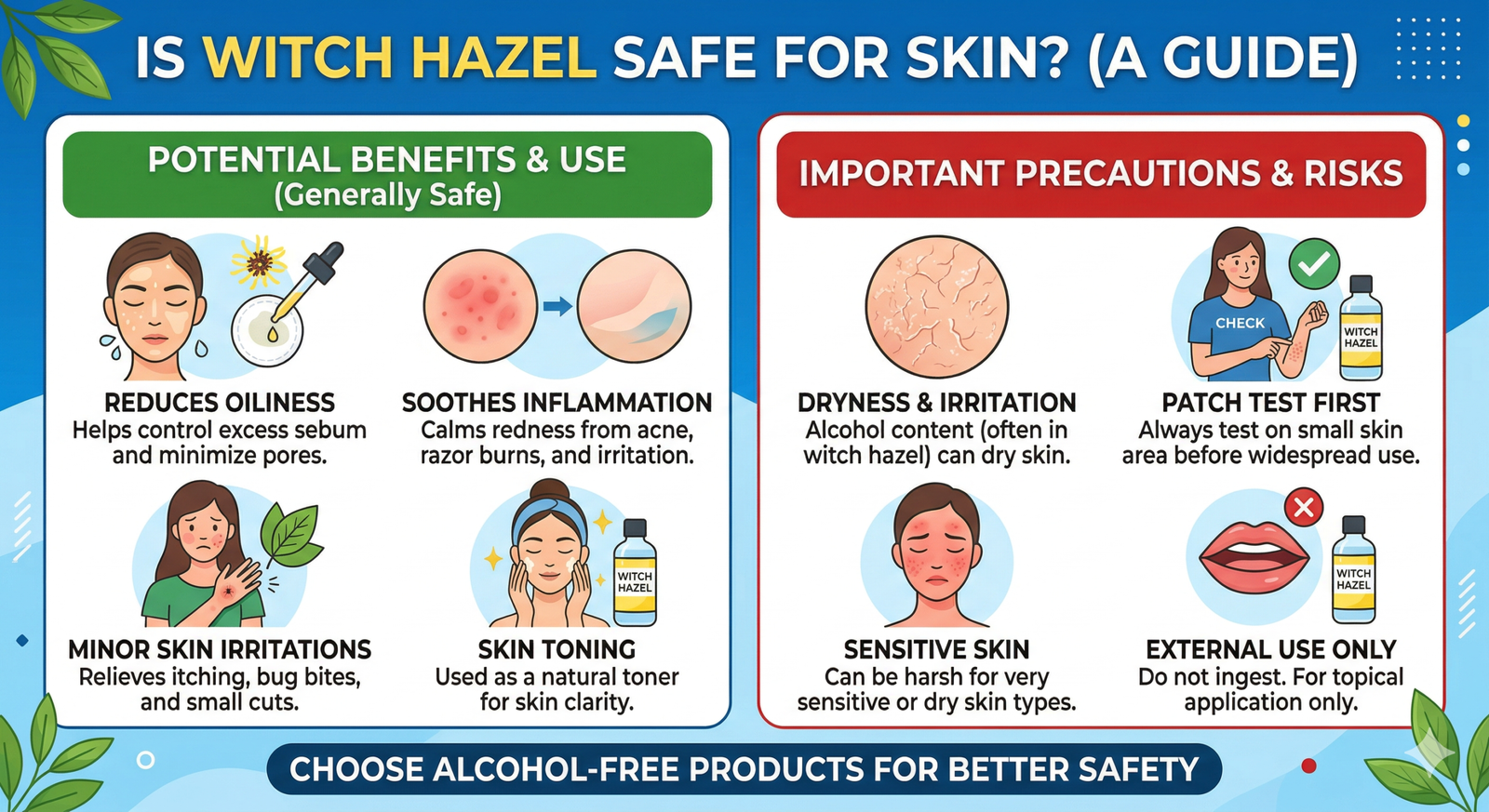
Many people see witch hazel on skincare labels, in pharmacies, and even in home remedies. It’s often described as a natural solution for skin problems, minor cuts, or even as a toner. But with so much advice online, it’s natural to wonder: is witch hazel safe? Let’s look at how witch hazel works, who should use it, what science says, and the risks you should know before adding it to your routine.
What Is Witch Hazel?
Witch hazel is a plant extract taken from the leaves and bark of the Hamamelis virginiana shrub. It is native to North America and has been used for centuries by Native Americans for its soothing and astringent properties. Today, it is found in many products, such as:
- Facial toners
- Aftershaves
- Hemorrhoid creams
- Anti-itch lotions
Witch hazel contains tannins and polyphenols, which help tighten the skin and reduce swelling. Most commercial witch hazel is mixed with alcohol, but alcohol-free versions are also available.
Common Uses Of Witch Hazel
Many people use witch hazel for different reasons. Here are the most popular ways it’s used:
- Skin toner: Helps remove oil and shrink pores.
- Soothing razor burn: Calms skin after shaving.
- Treating acne: Reduces redness and inflammation.
- Relieving itching: Eases discomfort from bug bites, eczema, or rashes.
- Reducing swelling: Used on bruises or under-eye bags.
- Hemorrhoids: Included in wipes and creams for pain relief.
Each use comes with its own benefits and risks, depending on your skin type and health condition.
Is Witch Hazel Safe For Skin?
Most people can use witch hazel on their skin without serious problems. However, safety can depend on the formulation (with or without alcohol), the person’s skin type, and how often it’s applied.
Benefits
- Mild astringent: Tightens skin and dries out excess oil.
- Soothes irritation: Can calm minor redness or itching.
- Natural antioxidant: Protects skin cells from damage.
Possible Side Effects
- Dryness: Witch hazel with alcohol can dry out or irritate sensitive skin.
- Allergic reaction: Some people may experience redness, itching, or rash.
- Sensitivity: Overuse can break down the skin’s protective barrier.
People with dry or eczema-prone skin should be extra careful. Alcohol-free witch hazel is gentler, but any product can trigger a reaction in sensitive individuals.
Witch Hazel Safety For Specific Groups
Some groups should be more careful with witch hazel:
| Group | Safety Notes |
|---|---|
| Children | Short-term topical use is usually safe, but avoid large areas and broken skin. |
| Pregnant/Breastfeeding Women | Topical use is likely safe, but avoid oral consumption without a doctor’s advice. |
| People with Allergies | Test on a small patch of skin first to check for reactions. |
Children
Pregnant/Breastfeeding Women
People with Allergies
Ingesting witch hazel is not recommended without medical advice. It may cause stomach upset, nausea, or even liver problems in large amounts.
Comparing Witch Hazel To Other Skin Products
Witch hazel is often compared to other skincare solutions. Here’s a quick look:
| Product | Main Ingredient | Main Effect | Common Side Effect |
|---|---|---|---|
| Witch Hazel | Tannins | Astringent, reduces swelling | Dryness, irritation |
| Alcohol-based Toner | Alcohol | Cleans oil, tightens skin | Dryness, stinging |
| Aloe Vera Gel | Aloe Vera | Soothing, moisturizing | Rare allergy |
Witch Hazel
Alcohol-based Toner
Aloe Vera Gel
Witch hazel is less harsh than pure alcohol toners but can still dry out the skin if overused. Aloe vera is usually safer for sensitive or dry skin.
Scientific Evidence And Research
Many studies support the soothing and anti-inflammatory effects of witch hazel, especially for minor skin irritation. For example, research shows that tannins in witch hazel can help reduce swelling and fight bacteria. However, most studies are small or done in labs, not on real people.
Large-scale clinical trials are limited. This means the true benefits and risks are not fully known. The U.S. Food and Drug Administration (FDA) considers witch hazel generally safe for external use, but not as a treatment for serious conditions.
You can read more about the science behind witch hazel at this Wikipedia page.
How To Use Witch Hazel Safely
To reduce risks and get the most benefit, follow these tips:
- Choose alcohol-free: Gentler on sensitive or dry skin.
- Patch test first: Apply a small amount to your inner arm and wait 24 hours.
- Use sparingly: Don’t apply to broken skin or use more than twice daily.
- Moisturize after: Use a gentle moisturizer to avoid dryness.
- Avoid swallowing: Only use witch hazel externally unless a doctor says it’s safe.
A common mistake is thinking “natural” means “risk-free. ” Even plant-based products can cause reactions, especially with frequent or heavy use.
Non-obvious Insights About Witch Hazel
Many beginners overlook two important details:
- Most commercial witch hazel contains ethyl alcohol as a preservative. This can undo the gentle effects people seek, especially if your skin is sensitive.
- Witch hazel’s astringent effect can tighten skin, but using it too often may strip away protective oils. This makes your skin more vulnerable to irritation or sun damage.
Always check the ingredient label and listen to your skin’s response.
Frequently Asked Questions
Is Witch Hazel Safe For Daily Use?
Most people can use witch hazel daily on healthy skin, but overusing it, especially with alcohol, can dry out or irritate your skin. If you notice redness, tightness, or flaking, reduce use to a few times a week.
Can Witch Hazel Help With Acne?
Yes, witch hazel can help reduce redness and swelling from acne. However, it doesn’t cure acne and may cause dryness if used too often. For severe acne, see a dermatologist.
Is Witch Hazel Safe During Pregnancy?
Topical use is generally safe during pregnancy, but avoid consuming it by mouth. Always ask your healthcare provider before using any new skincare products during pregnancy.
What Are The Side Effects Of Witch Hazel?
The most common side effects are dryness, redness, and mild irritation. Rarely, some people may have an allergic reaction. Discontinue use if you notice itching, swelling, or rash.
Is Witch Hazel Better Than Alcohol For Skin?
Witch hazel is usually gentler than pure alcohol-based products. However, many witch hazel products contain alcohol, so check labels. For very sensitive skin, an alcohol-free witch hazel or a product like aloe vera may be safer.
Final Thoughts
Witch hazel can be a helpful and safe addition to your skincare routine, but it is not risk-free. Always consider your skin type, check for alcohol content, and use it moderately. While science supports its traditional uses for minor irritation, there is not enough evidence for more serious conditions. When in doubt, speak with a healthcare professional, especially if you have ongoing skin problems or health conditions. Remember, safe skincare always means listening to your body first.