Jump To Section
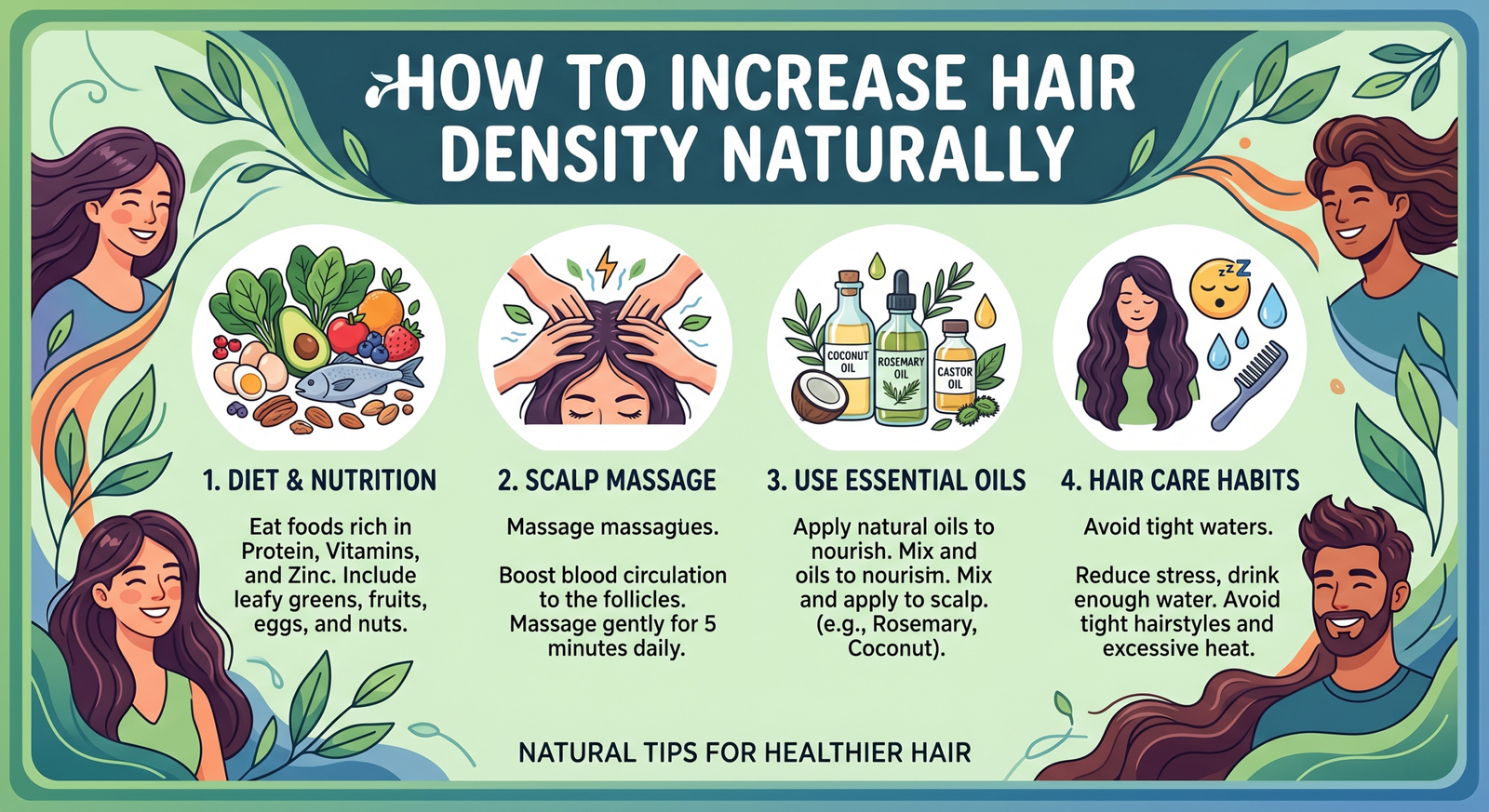
If you’re worried about thin hair, you’re not alone. Many people want to increase hair density naturally to look and feel their best. While genetics play a big role, your daily habits and choices make a real difference. With consistent care, you can boost your hair’s thickness and strength—without harsh chemicals or costly treatments.
Understanding Hair Density
Hair density means the number of hair strands on your scalp per square inch. People with high density have thick, full hair, while low density means hair looks thin or sparse. Factors like age, hormones, nutrition, stress, and styling affect hair density. Knowing what impacts your hair gives you the power to make positive changes.
Comparing Hair Density
Here’s how different hair density types look:
| Density Type | Appearance | Common Causes |
|---|---|---|
| High | Full, thick | Genetics, balanced diet |
| Medium | Moderate volume | Normal aging, mild stress |
| Low | Thin, sparse | Poor nutrition, stress, illness |
High
Medium
Low

Natural Ways To Increase Hair Density
Improving hair density naturally is possible with the right approach. Here are proven methods to help you get results:
1. Eat A Hair-friendly Diet
Your hair needs protein, iron, zinc, and vitamins to grow strong. Include these foods:
- Eggs (high in protein)
- Spinach (rich in iron)
- Nuts and seeds (zinc and omega-3)
- Berries (antioxidants)
- Fish (biotin and vitamin D)
A study in the Journal of Dermatology showed people with higher iron intake had thicker hair. Skipping meals or crash diets can lead to thinning.
2. Scalp Massage
Massaging your scalp improves blood flow and stimulates hair follicles. Use your fingertips and gentle circular motions for 5–10 minutes daily. Many people notice thicker hair after a few months of regular massage.
3. Use Natural Oils
Certain oils can help nourish the scalp and boost density:
- Coconut oil: Reduces protein loss, moisturizes
- Castor oil: Contains ricinoleic acid, promotes growth
- Rosemary oil: Shown in studies to stimulate hair follicles
Apply oil 1–2 times a week, leave for 30 minutes, then wash out. Some oils may cause reactions, so test a small area first.
4. Avoid Heat And Chemicals
Frequent use of hair dryers, straighteners, and chemical treatments damages hair and reduces density. Let your hair air dry and choose gentle, sulfate-free shampoos.
5. Reduce Stress
High stress increases the hormone cortisol, which can lead to hair loss. Try meditation, deep breathing, or regular exercise. Managing stress is often overlooked but makes a real difference.

6. Keep Your Scalp Clean
A clean scalp prevents blocked follicles and dandruff, both of which slow hair growth. Wash your hair as needed, but not too often. Aim for 2–3 times a week with mild shampoo.
7. Try Herbal Remedies
Some herbs help boost hair density:
- Amla (Indian gooseberry)
- Fenugreek seeds
- Aloe vera
For example, aloe vera gel can be applied directly to the scalp. Studies show it may help reduce inflammation and support hair growth.
8. Avoid Tight Hairstyles
Pulling hair into tight ponytails, braids, or buns can cause traction alopecia—hair loss from tension. Go for loose styles and use soft hair bands.
9. Consider Supplements
If your diet is lacking, biotin, vitamin D, and iron supplements may help. However, always check with your doctor before starting new supplements. Too much can cause side effects.
10. Protect Hair From Sun
UV rays can weaken hair strands and fade color. Wear a hat or use UV-protectant sprays when outside for long periods.
Hair Density Vs. Hair Thickness
It’s easy to confuse hair density with hair thickness. Density is about the number of hairs, while thickness means the width of each strand. You can have fine hair (thin strands) but high density (many strands), or thick strands but low density.
| Feature | Density | Thickness |
|---|---|---|
| Definition | Number of hairs | Width of each strand |
| Impact | Fullness | Texture |
| Improvement Methods | Diet, scalp care | Conditioning, oils |
Definition
Impact
Improvement Methods

Common Mistakes When Trying To Increase Hair Density
Many people make errors that slow progress:
- Using too much product: Heavy oils or serums can clog follicles.
- Skipping scalp care: Focusing only on hair length ignores the root.
- Over-washing: Strips natural oils and weakens hair.
- Ignoring medical issues: Thyroid problems, anemia, or hormonal imbalances affect density. If you notice sudden changes, talk to a doctor.
When To Seek Professional Help
If natural methods do not work after several months, or you see patchy hair loss, consult a dermatologist. Medical treatments like minoxidil or PRP (platelet-rich plasma) therapy may be needed. For more details on clinical hair density solutions, visit NIH PubMed Central.
Frequently Asked Questions
How Long Does It Take To See Results From Natural Methods?
Most people notice improvement in 3–6 months. Hair grows slowly, so patience is key. Results depend on your starting point and how well you follow healthy habits.
Can Hair Density Be Increased After Age 40?
Yes, but it may be slower. Focus on nutrition, scalp care, and gentle styling. Hormonal changes can affect density, so regular check-ups help.
Are Natural Oils Safe For All Hair Types?
Most oils are safe, but some may cause irritation. Always do a patch test before full use. If you have allergies or scalp conditions, ask your dermatologist.
Do Supplements Really Help Increase Hair Density?
Supplements work if you have a deficiency. For example, low iron or biotin levels can cause thinning. Taking excess supplements won’t help and can cause harm.
Is Hair Density Affected By Washing Frequency?
Yes. Washing too often strips natural oils, while too little can clog follicles. Find a balance based on your hair type—usually 2–3 times a week is ideal.
Making small changes in your daily routine can help you increase hair density naturally. Focus on nutrition, gentle care, and managing stress. Be consistent, and you’ll see stronger, fuller hair over time. If you’re worried or see sudden changes, don’t hesitate to seek professional advice.