Jump To Section
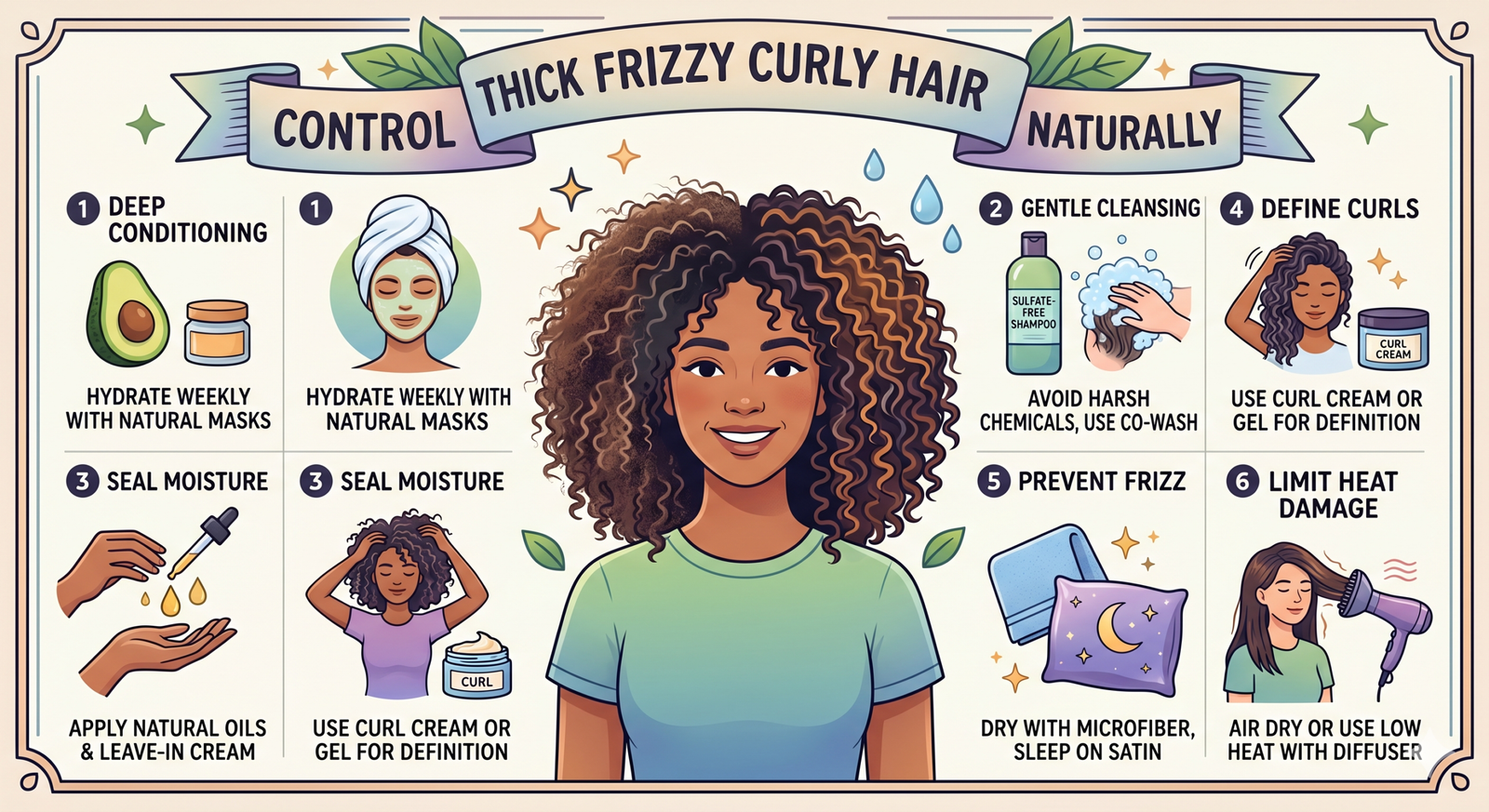
Managing thick frizzy curly hair can feel impossible some days. Humidity, dryness, and rough handling often make things worse. Many people rush for chemical treatments, but these can damage hair over time. The good news? You can control thick frizzy curly hair naturally with simple routines, healthy habits, and a few smart tricks. Let’s explore practical methods that work, even if your hair seems wild.
Understanding Thick Frizzy Curly Hair
Thick curly hair is unique. The curl pattern makes hair look fuller, but each strand is usually drier. Frizz happens when moisture leaves the hair and outside humidity gets in. Curly hair cuticles open up, causing roughness and flyaways. Most people with this hair type struggle with dryness, tangles, and volume that is hard to manage.
A 2022 study found that curly hair fibers lose moisture 50% faster than straight hair. This means natural care is essential to keep hair healthy and smooth.
Natural Care Routine
Controlling thick frizzy curly hair starts with a gentle, consistent routine. Here’s a simple plan:
1. Wash Less Often
Washing too much removes natural oils. Limit washing to 1-2 times per week. Use a sulfate-free shampoo and focus on the scalp.
2. Deep Conditioning
Apply a deep conditioner every week. Look for products with shea butter, coconut oil, or argan oil. Leave it on for at least 20 minutes.
3. Detangle Gently
Use a wide-tooth comb or your fingers. Detangle when hair is wet and has conditioner in it.
4. Air Dry Or Diffuse
Avoid towel rubbing or heat styling. Let hair air dry or use a diffuser on low heat.
5. Moisturize Daily
Apply a small amount of leave-in conditioner or natural oils. Focus on the ends and dry parts.
Common Mistakes
- Using regular towels (causes frizz)
- Brushing dry hair (breaks curls)
- Skipping conditioner (increases dryness)

Best Natural Ingredients For Frizz Control
Certain natural ingredients work well for thick curly hair. Here’s a quick comparison of three popular options:
| Ingredient | Benefits | How to Use |
|---|---|---|
| Coconut Oil | Moisturizes, reduces frizz, adds shine | Apply a small amount to damp hair |
| Aloe Vera | Hydrates, soothes scalp, defines curls | Mix with water, spray on hair |
| Shea Butter | Locks in moisture, softens hair | Work into ends after washing |
Coconut Oil
Aloe Vera
Shea Butter
Try mixing coconut oil with a few drops of aloe vera gel for a homemade anti-frizz serum. This works well for most curly hair types.
Protective Styling And Sleep Habits
Protective styles help keep frizz away and prevent breakage. Good options include braids, buns, and twists. These styles reduce exposure to humidity and friction.
For sleep, use a silk or satin pillowcase. Cotton pillowcases absorb moisture and cause hair to rub, making frizz worse. You can also wrap your hair in a silk scarf.
Here’s a simple comparison of pillowcase materials:
| Material | Impact on Frizz | Comfort |
|---|---|---|
| Cotton | High frizz | Soft, but dries hair |
| Satin | Low frizz | Smooth, keeps moisture |
| Silk | Lowest frizz | Very smooth, best for curls |
Cotton
Satin
Silk

Diy Remedies For Thick Frizzy Curly Hair
You don’t need expensive products to tame your hair. Homemade masks and rinses can make a big difference. Here are two easy remedies:
1. Banana Honey Mask
Mash one ripe banana and mix with two tablespoons of honey. Apply to damp hair, cover with a shower cap, and leave for 30 minutes. Rinse with cool water.
2. Apple Cider Vinegar Rinse
Mix one tablespoon of apple cider vinegar with one cup of water. Pour over hair after shampooing, leave for two minutes, and rinse. This balances pH and closes cuticles, reducing frizz.
Many people skip these remedies because they seem simple, but they really work. The banana mask adds moisture, while the vinegar rinse smooths the hair surface.
Lifestyle Choices That Help
Healthy hair needs more than good products. Your diet, stress, and water intake matter. Curly hair benefits from:
- Drinking water: Helps keep hair hydrated from inside.
- Eating omega-3 rich foods: Salmon, walnuts, and chia seeds make hair stronger.
- Reducing stress: High stress can make hair brittle and frizzy.
A 2020 report showed people who ate more healthy fats had 20% less breakage in curly hair.
Smart Tips For Long-term Results
Consistency is key. Stick to your routine and give it time. Here are some non-obvious tips:
- Trim ends every 2-3 months: Prevents split ends and keeps curls healthy.
- Avoid heat styling: Flat irons and blow dryers cause dryness and frizz.
- Check water quality: Hard water increases frizz. Try a shower filter if you notice rough hair after washing.
Many people don’t realize that water quality can affect frizz. Hard water has minerals that make hair feel dry and tangled.
Frequently Asked Questions
What Is The Best Oil For Thick Frizzy Curly Hair?
Coconut oil is a top choice. It penetrates the hair shaft, adds moisture, and reduces frizz. You can also try argan oil or olive oil for similar benefits.
How Often Should I Deep Condition Curly Hair?
Once per week is ideal. If your hair is very dry, you can deep condition twice weekly. Always use products with natural oils and avoid heavy silicones.
Can I Brush My Curly Hair When It’s Dry?
No. Brushing dry curly hair causes breakage and frizz. Detangle only when hair is wet and has conditioner applied.
Are There Any Natural Treatments For Frizz?
Yes. Try a banana honey mask or apple cider vinegar rinse. These remedies add moisture and smooth the cuticle. You can find more natural ideas on Healthline.
Does Humidity Make Curly Hair Worse?
Definitely. Humidity opens hair cuticles and lets moisture escape. Use anti-humidity sprays or natural oils to create a barrier.
Getting thick frizzy curly hair under control is possible with consistent natural care and smart habits. Focus on gentle routines, protective styles, and healthy choices. With patience, your hair will become softer, healthier, and easier to manage—no chemicals needed.