Jump To Section
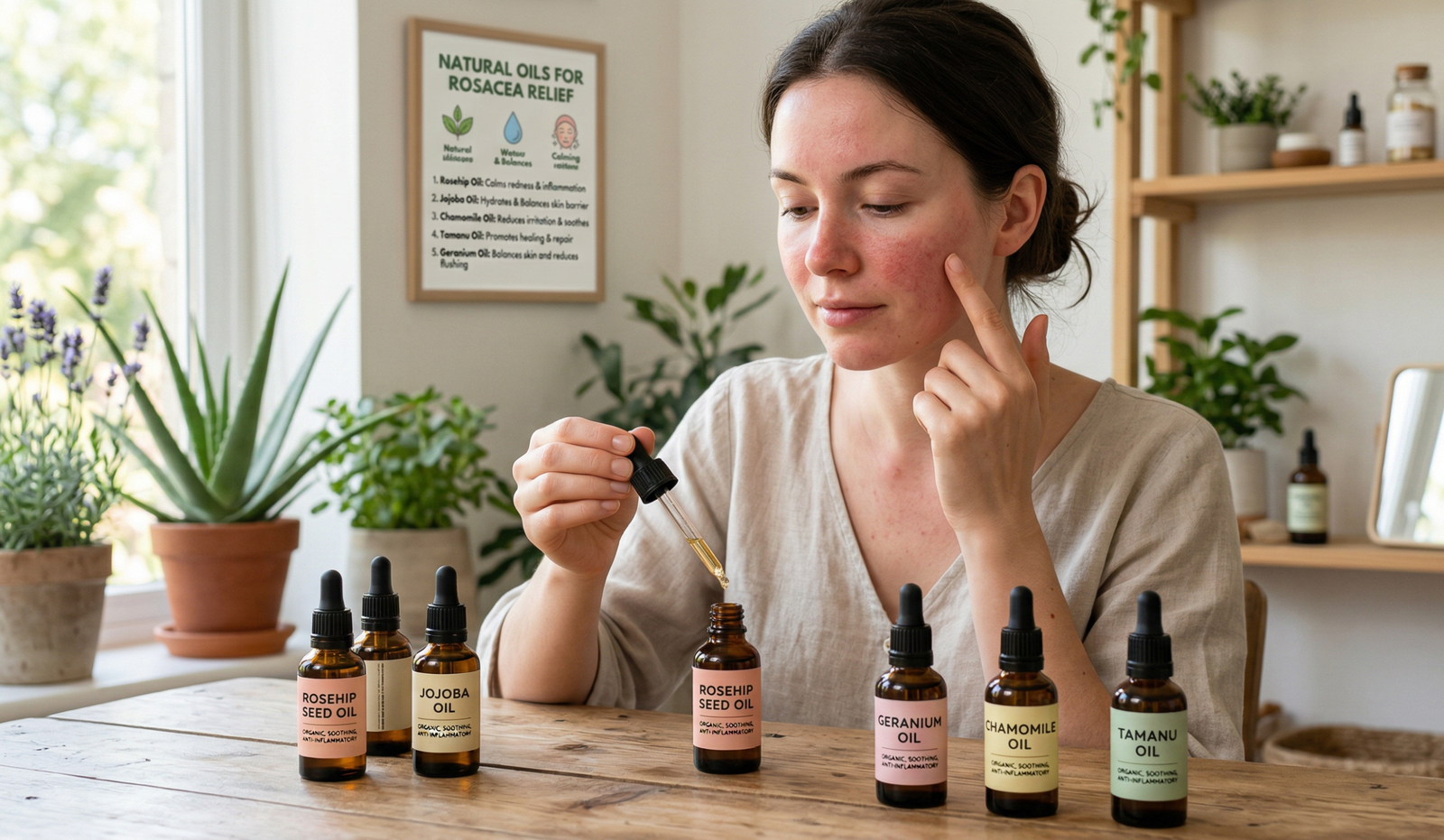
Rosacea is a common skin condition that affects millions of people worldwide. It causes redness, visible blood vessels, and sometimes pimples on the face. Many people with rosacea struggle to find skincare products that calm their skin without causing irritation.
Using the right facial oils can make a big difference. The best oils for rosacea are gentle, non-comedogenic, and contain anti-inflammatory properties. But not all oils are safe for sensitive skin. Below, you’ll find the top choices, what makes them effective, and how to use them for the best results.
Why Oils Matter For Rosacea
People with rosacea often have a damaged skin barrier. This means their skin loses moisture easily and reacts badly to harsh ingredients. The right facial oils help lock in moisture, reduce redness, and soothe irritation. Some oils also have natural compounds that fight bacteria and inflammation, which can help prevent flare-ups.
Many creams and lotions have added fragrances or chemicals. Oils are simpler and, when chosen carefully, are less likely to trigger sensitive skin. Still, it’s important to pick oils that are known for their gentle effects.
Top 8 Best Oils For Rosacea
Let’s look at the most effective oils for calming rosacea symptoms. Each has unique benefits and practical tips for use.
1. Jojoba Oil
Jojoba oil is very similar to the skin’s natural sebum. It moisturizes without clogging pores. Its anti-inflammatory properties help reduce redness and irritation. Jojoba oil is also rich in vitamin E, which supports skin repair.
2. Rosehip Seed Oil
Rosehip oil is packed with vitamin A and vitamin C. These vitamins help repair damaged skin and fade redness over time. Rosehip oil is lightweight and absorbs quickly, making it a great choice for daytime use.
3. Squalane Oil
Squalane is a plant-based oil that feels light and non-greasy. It deeply hydrates and strengthens the skin barrier. Squalane oil is non-irritating and safe even for extremely sensitive skin.
4. Marula Oil
Marula oil is rich in antioxidants and fatty acids. It soothes inflammation and protects against environmental damage. Marula oil also helps retain moisture, which is critical for rosacea-prone skin.
5. Sea Buckthorn Oil
Sea buckthorn is famous for its high content of omega-7 fatty acids and carotenoids. These compounds help reduce redness and support healing. The oil has a bright orange color, so it’s best mixed with another carrier oil.
6. Hemp Seed Oil
Hemp seed oil is non-comedogenic and high in essential fatty acids. It calms inflammation and helps balance oily skin. Hemp oil can also reduce the appearance of visible blood vessels.
7. Camellia Oil
Camellia oil, also called tea seed oil, is rich in antioxidants and vitamins. It absorbs easily, hydrates, and does not leave a greasy feel. Camellia oil is gentle enough for daily use.
8. Argan Oil
Argan oil contains vitamin E, polyphenols, and squalene. It soothes irritation and supports the skin’s barrier. Argan oil is especially good for dry or flaky areas caused by rosacea.
Comparing The Best Oils
To make it easier to understand, here’s a direct comparison of the key features of each oil:
| Oil | Main Benefit | Skin Feel | Comedogenic Rating* |
|---|---|---|---|
| Jojoba | Soothing, repairs barrier | Light | 2 |
| Rosehip | Reduces redness, repairs | Very light | 1 |
| Squalane | Hydrates, non-irritating | Very light | 0 |
| Marula | Antioxidant, moisture | Medium | 3 |
| Sea Buckthorn | Reduces redness, heals | Medium | 1 |
| Hemp Seed | Anti-inflammatory | Light | 0 |
| Camellia | Antioxidant, gentle | Light | 1 |
| Argan | Soothing, barrier support | Medium | 0 |
Jojoba
Rosehip
Squalane
Marula
Sea Buckthorn
Hemp Seed
Camellia
Argan
*Comedogenic rating: 0 (won’t clog pores) to 5 (likely to clog pores)
How To Use Oils For Rosacea
Applying facial oil is simple, but a few tips can make it more effective:
- Always patch test a new oil on your jawline or behind your ear. Wait 24 hours to check for reactions.
- Use 2-3 drops of oil after cleansing, while the skin is still damp. This helps lock in moisture.
- Gently press the oil into your skin instead of rubbing it.
- Avoid mixing too many oils at once. Start with one to see how your skin reacts.
- Store oils in a cool, dark place to keep them fresh.
A common mistake is using too much oil, which can clog pores or cause breakouts. A little goes a long way.
What To Avoid When Choosing Oils
Not all natural oils are safe for rosacea. Some can make redness or irritation worse. Avoid these:
- Coconut oil: Highly comedogenic and can trigger breakouts.
- Essential oils (like tea tree, peppermint, or lavender): These can be irritating and cause allergic reactions.
- Mineral oil: Can feel heavy and clog pores.
Always read ingredient lists. Oils labeled “fragrance-free” and “cold-pressed” are best for sensitive skin.
When To See A Dermatologist
Oils can help mild rosacea, but they are not a cure. If you have severe symptoms, like eye problems, thickened skin, or painful bumps, see a dermatologist. Prescription treatments may be needed. Also, if your skin reacts badly to any oil, stop using it right away.
Data On Rosacea And Oils
Research shows that moisturizing with safe oils can reduce dryness and sensitivity. For example, a study found that using squalane oil increased skin hydration by 40% in people with sensitive skin after two weeks. Another study reported that rosehip oil reduced redness by up to 30% in mild rosacea cases.
Here’s a look at how quickly some oils can improve symptoms:
| Oil | Improvement Time (Days) | Common Results |
|---|---|---|
| Jojoba | 7-14 | Softer, calmer skin |
| Rosehip | 10-21 | Less redness, smoother texture |
| Squalane | 5-10 | Hydrated, less flaky |
Jojoba
Rosehip
Squalane
Frequently Asked Questions
What Is The Safest Oil For Sensitive Rosacea Skin?
Squalane oil is one of the safest choices. It is lightweight, non-irritating, and almost never causes breakouts. It also helps strengthen the skin barrier.
Can I Use Essential Oils For Rosacea?
It is better to avoid essential oils. They are strong and can irritate sensitive skin or cause allergic reactions. Stick to plain, cold-pressed carrier oils.
How Often Should I Apply Oil To My Face?
Use facial oil once or twice daily, after cleansing. Overuse can clog pores, so start with a small amount and adjust as needed.
Should I Stop Using Moisturizer If I Use Oil?
You can use both. Apply oil after your moisturizer to lock in hydration. Some people with oily skin may use oil alone, but many need both for best results.
What If My Skin Gets Worse After Using Oil?
Stop using the oil right away and wash your face with a gentle cleanser. If irritation continues, see a dermatologist. Every skin is different, and some people may react even to gentle oils.
Choosing the right oil can help control rosacea symptoms and make your skin feel more comfortable. Always start slow and listen to your skin’s needs. For more details on rosacea-friendly skincare, check out the American Academy of Dermatology.
With careful selection and use, facial oils can become a soothing, effective part of your rosacea skincare routine.