Jump To Section
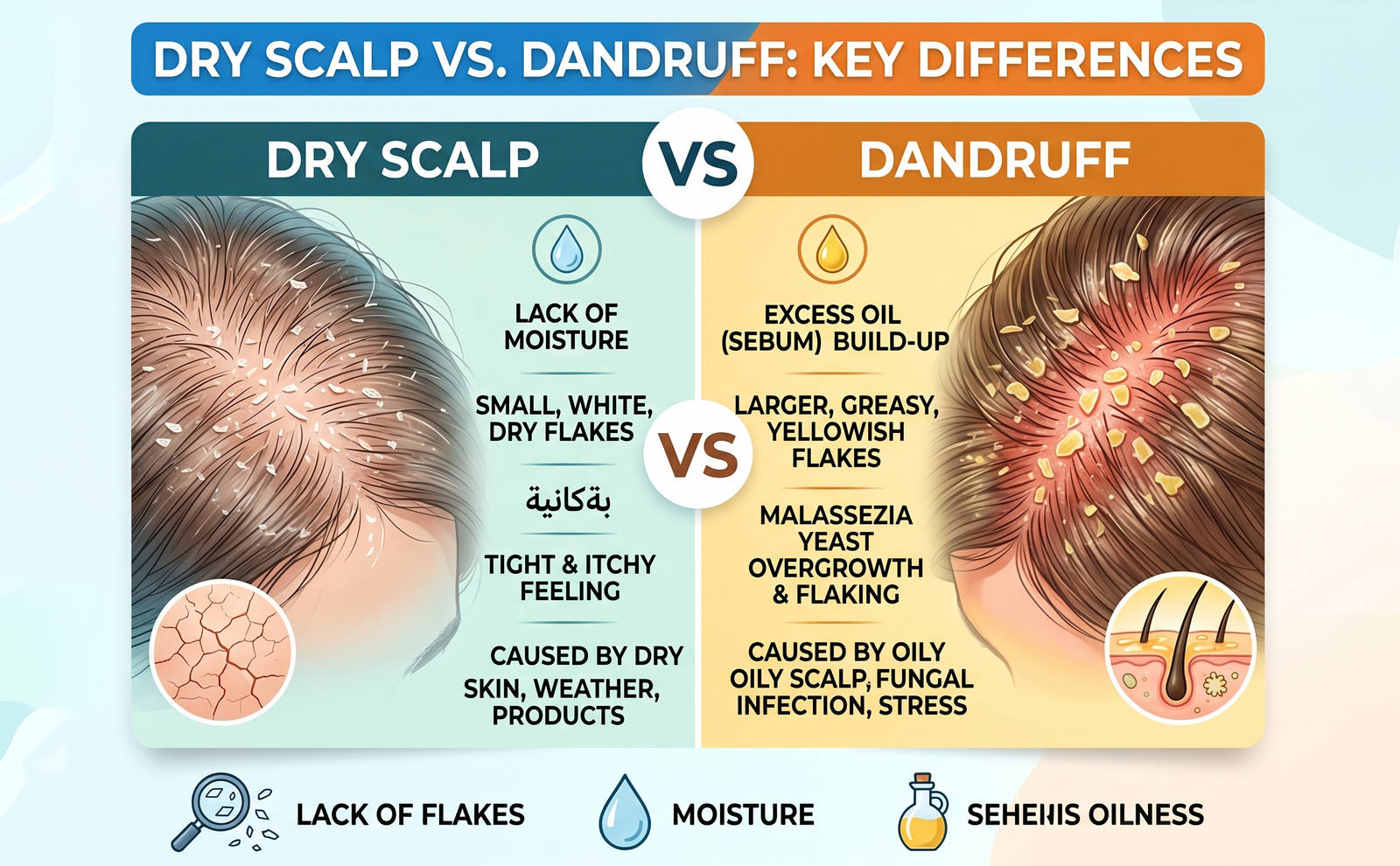
Dry Scalp Vs Dandruff Key Differences
Are you struggling with flakes on your scalp but not sure if it’s dry scalp or dandruff? Many people mix up these two problems, but they are not the same. Understanding the difference can help you pick the right treatment and finally get relief. In this guide, you’ll learn the key differences, causes, symptoms, and best ways to manage each condition. Whether you notice itchiness, white flakes, or oily patches, knowing what’s really happening on your scalp is the first step to healthier hair.
What Is Dry Scalp?
A dry scalp happens when your skin lacks enough moisture. This can lead to tightness, mild itching, and small white flakes. People with dry skin elsewhere (like hands or face) often have a dry scalp too.
Common causes:
- Cold weather or low humidity
- Over-washing hair
- Using harsh shampoos
- Not drinking enough water
- Skin conditions like eczema
Dry scalp is more common in winter months. It’s not contagious and usually doesn’t cause severe discomfort. The flakes are small and dry, often falling off easily.
What Is Dandruff?
Dandruff is a condition where your scalp produces too many skin cells, which then shed in large, oily flakes. It’s mostly caused by a yeast-like fungus called Malassezia that lives on the scalp. This fungus grows in oily environments.
Main causes:
- Oily skin and scalp
- Sensitivity to hair products
- Fungal growth
- Skin disorders like seborrheic dermatitis
Dandruff can appear year-round. It’s not dangerous, but it can be embarrassing and tricky to control. Dandruff flakes are bigger, yellowish or white, and often stick to the hair.
Dry Scalp Vs Dandruff: Key Differences
Let’s break down the main differences in a clear comparison:
| Feature | Dry Scalp | Dandruff |
|---|---|---|
| Flake Type | Small, dry, white | Large, oily, white/yellow |
| Itching | Mild | Moderate to severe |
| Scalp Condition | Dry, tight | Oily, irritated |
| Causes | Lack of moisture, harsh products | Fungus, excess oil |
| Seasonality | Worse in winter | Year-round |
Flake Type
Itching
Scalp Condition
Causes
Seasonality
Quick tip: If your flakes are dry and you feel tightness, it’s likely dry scalp. If your scalp feels oily and the flakes are greasy, it’s probably dandruff.
Symptoms Comparison
It’s easy to mistake one for the other. Here’s a detailed look:
| Symptom | Dry Scalp | Dandruff |
|---|---|---|
| Flaking | Fine, powdery | Thick, clumped |
| Scalp Appearance | Red, sometimes flaky | Oily, inflamed patches |
| Hair Impact | Dry, brittle | Oily roots |
| Location | Scalp only | Can affect eyebrows, beard |
Flaking
Scalp Appearance
Hair Impact
Location
Some people notice both conditions at once, especially during seasonal changes. This overlap can make diagnosis tricky.
How To Treat Dry Scalp
Treating dry scalp is usually simple. Focus on adding moisture:
- Use a gentle shampoo without sulfates.
- Wash hair less often (2-3 times a week).
- Apply a scalp oil like coconut or jojoba.
- Use a humidifier at home.
- Drink plenty of water daily.
- Avoid heat styling tools.
Pro tip: Look for shampoos labeled “hydrating” or “moisturizing.” They contain ingredients that help retain moisture.
How To Treat Dandruff
Dandruff often needs targeted treatments:
- Try a medicated shampoo (look for zinc pyrithione, selenium sulfide, or ketoconazole).
- Wash hair regularly to reduce oil build-up.
- Avoid heavy styling products.
- Massage scalp gently to loosen flakes.
- Reduce stress, as it can worsen dandruff.
Non-obvious insight: Many people skip using conditioner with anti-dandruff shampoo. But a lightweight conditioner on the hair ends (not scalp) keeps hair soft without affecting dandruff treatment.
Mistakes People Make
Some common errors can slow your progress:
- Using strong dandruff shampoos for dry scalp, which makes dryness worse
- Scrubbing the scalp too hard, leading to more irritation
- Switching products too often, not giving them time to work
- Ignoring other skin conditions (like psoriasis or eczema)
Another insight: Don’t assume all flakes mean dandruff. Many cases are actually dry scalp, especially after trying new hair products or moving to a cold area.
Prevention Tips
You can reduce both problems with smart habits:
- Avoid hot showers; lukewarm water is best
- Limit chemical treatments and dyes
- Use a soft brush to avoid scratching
- Protect scalp from extreme weather with hats
Over 50 million Americans have dandruff, but many never get proper advice. Prevention starts with gentle care and knowing your scalp type.
When To See A Doctor
If you notice:
- Severe redness or pain
- Bleeding or sores
- Flakes spreading to face, neck, or ears
- No improvement after weeks of treatment
It’s time to see a dermatologist. Sometimes, scalp psoriasis or fungal infections may look like dandruff or dry scalp but need different treatment. For more details on scalp conditions, visit American Academy of Dermatology.
Frequently Asked Questions
How Can I Tell If I Have Dry Scalp Or Dandruff?
Look at your flakes. Dry scalp flakes are small and white, and your scalp feels tight. Dandruff flakes are larger, oily, and your scalp feels greasy or itchy.
Can I Have Both Dry Scalp And Dandruff At The Same Time?
Yes, especially in changing seasons. You might have oily patches with dry areas. Using a gentle shampoo and balancing oil can help.
Do Home Remedies Work For Dandruff?
Some home remedies like tea tree oil or apple cider vinegar may help mild dandruff, but medicated shampoos are more effective for tough cases.
Is Dandruff Contagious?
No, dandruff is not contagious. The fungus causing dandruff is present on most scalps and doesn’t spread from person to person.
Will Changing My Diet Help My Scalp?
Eating more omega-3 fatty acids, fruits, and vegetables can improve scalp health. Hydration is also important for dry scalp.
Getting the right diagnosis is the key to solving your scalp issues. With clear knowledge of dry scalp versus dandruff, you can choose the right products and stop the flakes for good.