Jump To Section
- Choosing The Right Hot Styling Tools
- Setting The Correct Temperature
- Using Heat Protectant Products
- Drying Hair The Right Way
- Sectioning And Handling Hair Properly
- Limiting Frequency Of Heat Styling
- Regular Maintenance For Healthy Hair
- Advanced Expert Tips
- Common Mistakes To Avoid
- Signs Of Heat Damage And Recovery Steps
- Frequently Asked Questions
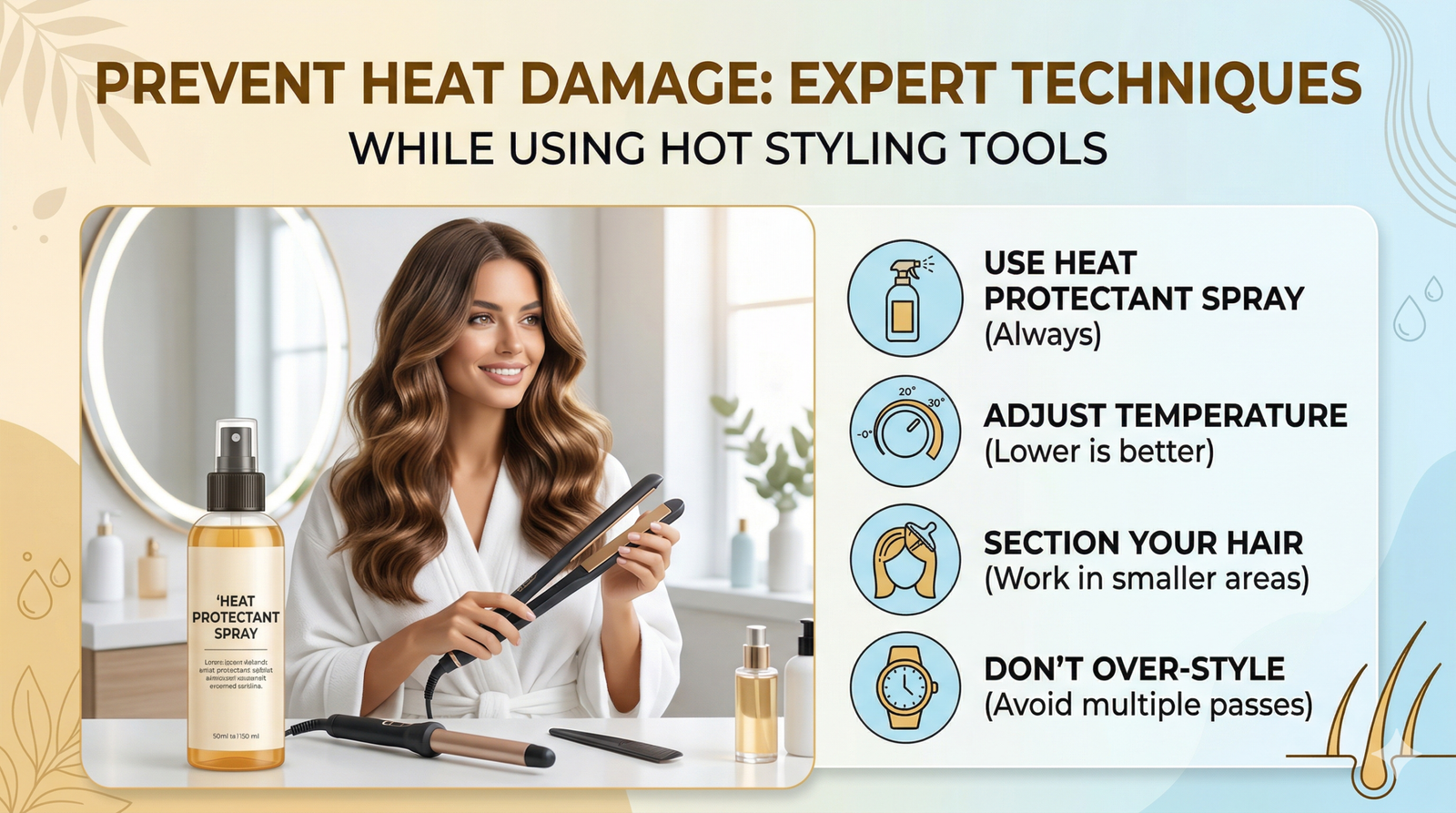
If you love styling your hair with heat tools, you probably know the risks. Flat irons, curling wands, and hair dryers give you amazing looks, but they can cause heat damage. Dryness, split ends, breakage, and loss of shine are common problems. Many people think heat damage is unavoidable, but experts know how to prevent it. With the right techniques, you can style your hair safely and keep it healthy.
This guide shares professional methods to protect your hair from heat. You’ll learn how to choose the best tools, use the right products, and build habits that keep your hair strong. Even beginners can follow these steps and see a big difference in their hair’s look and feel.
Choosing The Right Hot Styling Tools
Not all styling tools are equal. The material, temperature control, and technology make a huge difference in how much heat your hair receives.
| Tool Type | Best Material | Why It Matters |
|---|---|---|
| Flat Iron | Ceramic/Tourmaline | Even heat, less damage |
| Curling Wand | Titanium | Quick heating, smooth finish |
| Blow Dryer | Ionic | Reduces frizz, dries faster |
Ceramic plates distribute heat evenly and prevent hot spots. Tourmaline releases negative ions to reduce frizz. Titanium heats up quickly and stays consistent. Always check if your tool has adjustable temperature settings. Tools with only “on/off” switches are risky. Experts recommend tools with digital controls for precise heat management.
Setting The Correct Temperature
Many people use the highest heat setting, thinking it will work faster. But this is a big mistake. Different hair types need different temperatures.
| Hair Type | Recommended Temperature |
|---|---|
| Fine/Thin | Below 300°F (150°C) |
| Normal | 300–350°F (150–177°C) |
| Thick/Coarse | 350–400°F (177–204°C) |
If you are unsure, start with a lower setting and increase only if needed. Using high heat on thin hair can cause breakage after just a few uses. Professional stylists often use lower heat and spend more time, rather than rushing with high temperatures.
Using Heat Protectant Products
Heat protectant sprays and creams are your best defense against heat damage. These products create a barrier on your hair, locking in moisture and reducing the impact of heat.
- Apply the product to damp or dry hair before styling.
- Use enough to cover each strand but avoid over-saturating.
- Look for protectants with silicone, keratin, or natural oils.
Studies show that heat protectants can reduce hair damage by up to 50%. Many people skip this step, thinking it’s unnecessary, but experts never style hair without protection.
Drying Hair The Right Way
Styling wet or damp hair with hot tools causes steam damage. Always make sure your hair is fully dry before using flat irons or curling wands.
- Use a microfiber towel to absorb water quickly.
- Air dry whenever possible.
- If using a blow dryer, keep it at a low or medium setting.
Don’t hold the dryer too close to your scalp. Keep the nozzle about 6 inches away. For extra protection, use a diffuser attachment. This spreads heat and prevents direct blasts on your hair. For an even safer and more efficient blowout experience, explore the Best Premium Hair Dryer Brushes for Salon Blowouts at Home.

Credit: colorwowhair.com
Sectioning And Handling Hair Properly
Experts recommend dividing your hair into small sections before styling. This makes the process safer and more effective.
- Clip your hair into 4–6 sections.
- Work on one section at a time.
- Avoid going over the same piece multiple times.
When you rush and style large chunks, you often need more heat and pressure. Sectioning ensures every strand gets even attention and reduces the need for repeated passes.
Limiting Frequency Of Heat Styling
Even with the best products and tools, frequent heat styling adds up. Try to limit hot tool use to 2–3 times per week.
- Use heat-free styles like braids or buns in between.
- On “off” days, use dry shampoo to refresh your hair.
This gives your hair time to recover and rebuild its natural strength.
Regular Maintenance For Healthy Hair
Keeping your hair healthy makes it less likely to suffer from heat damage.
- Trim your ends every 6–8 weeks.
- Use deep conditioning treatments once per week.
- Avoid harsh shampoos with sulfates.
Healthy hair responds better to styling, and the cuticle stays strong. If you notice dryness or split ends, pause heat styling and focus on repair.
Advanced Expert Tips
Many professionals use extra methods that beginners often miss.
- Cool Down Technique: After curling or straightening, let each section cool before touching or brushing. This locks the shape and reduces stress.
- Pre-Styling Oil: Apply a small amount of argan oil or coconut oil before heat protectant. It adds moisture and extra protection.
- Tool Cleaning: Dirty plates and barrels can burn residue onto hair. Clean your tools regularly with alcohol wipes.
These steps take only a few extra minutes but can make a big difference in the health and shine of your hair.

Credit: www.garnierusa.com
Common Mistakes To Avoid
People often repeat the same errors that lead to heat damage.
- Using old or cheap tools without temperature control
- Skipping heat protectant products
- Styling wet hair
- Using high heat on fine hair
- Styling the same section multiple times
Avoiding these mistakes helps you keep your hair strong and beautiful.
Signs Of Heat Damage And Recovery Steps
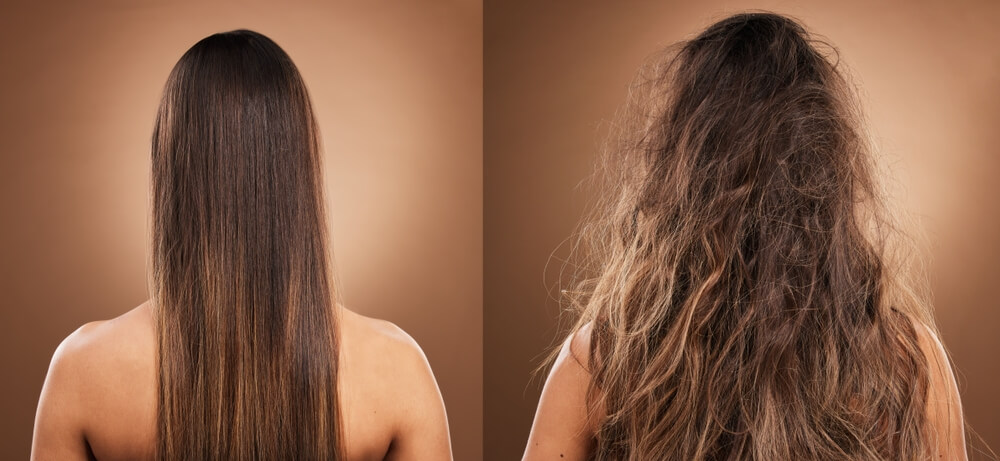
You might not notice damage until it’s too late. Watch for these signs:
- Dryness and rough texture
- Split ends
- Breakage and hair falling out
- Loss of shine
If you see these, reduce heat styling immediately. Use protein treatments and deep conditioners to repair the hair. Consider visiting a professional for advice if the damage is severe.
Credit: evalectric.com
Frequently Asked Questions
How Often Can I Use Hot Styling Tools Without Damaging My Hair?
It’s best to use hot tools no more than 2–3 times per week. Give your hair breaks and use protective products every time.
What Is The Best Heat Protectant For Daily Styling?
Choose a product with silicone or keratin. Spray or cream formulas are easy to apply. Popular brands include Tresemmé, CHI, and MoroccanOil.
Can I Style Damp Hair With A Flat Iron Or Curling Wand?
No. Styling damp hair causes serious damage. Always dry your hair completely before using hot tools.
Are Expensive Styling Tools Better For Preventing Heat Damage?
Usually, yes. High-quality tools have better materials, even heat, and temperature control. Investing in good tools saves your hair in the long run.
How Can I Repair Hair That’s Already Heat Damaged?
Reduce heat styling, use deep conditioning and protein treatments, and trim damaged ends. For severe cases, consult a hairstylist. For more tips, visit Healthline.
Preventing heat damage is possible with the right habits. Choose the best tools, set safe temperatures, use protectants, and take care of your hair. Even small changes can protect your hair from harm and keep it looking beautiful every day.