Jump To Section
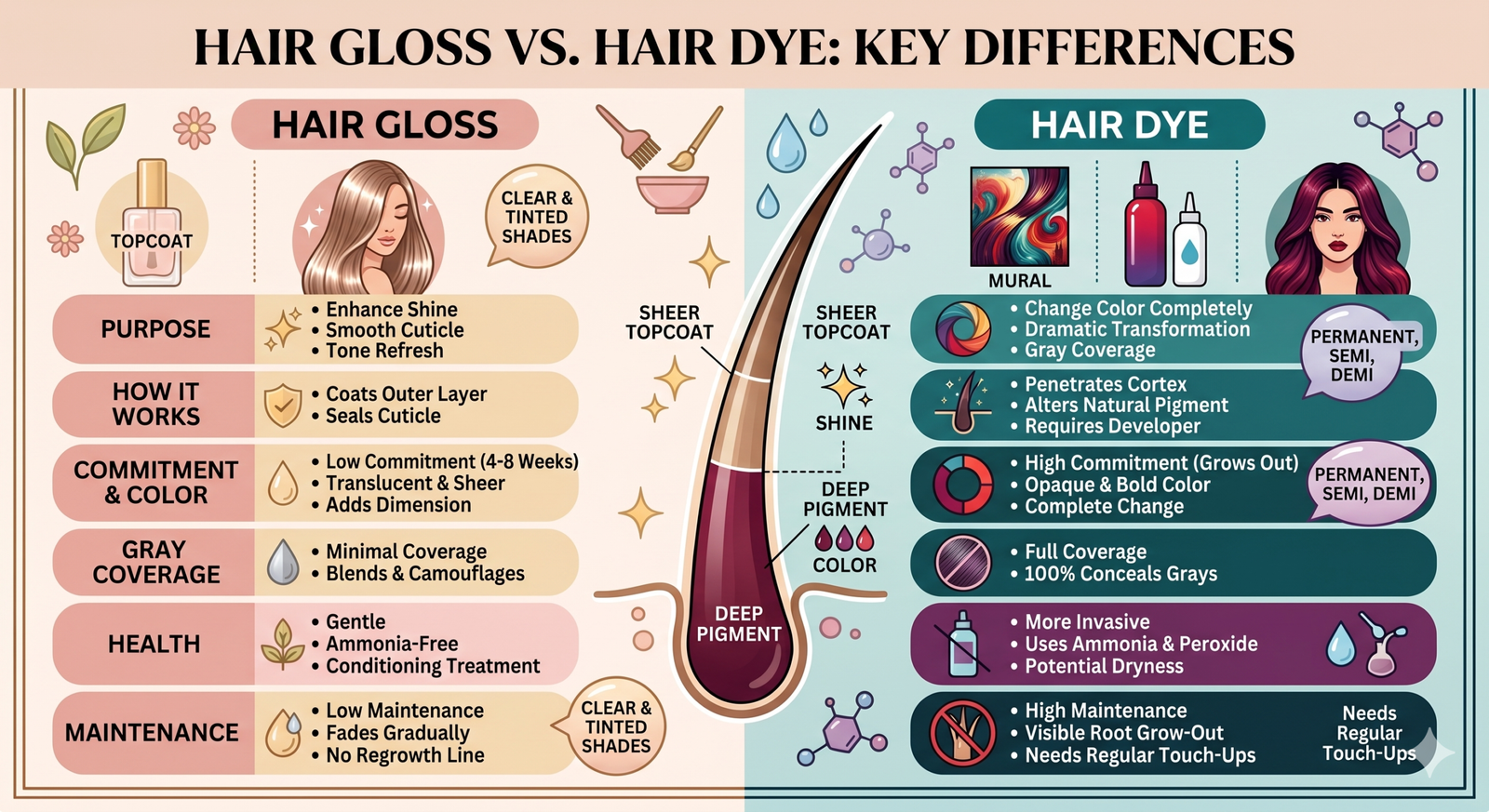
Choosing between hair gloss and hair dye can be confusing, especially if you want to change your hair color or add shine. Both products seem similar, but their effects, ingredients, and results are very different. Understanding these differences will help you decide which one is right for your hair goals, whether you want a quick refresh or a bold new look.
What Is Hair Gloss?
Hair gloss is a semi-permanent treatment that adds shine, tone, and a touch of color to hair. It works like a topcoat for your hair, making it look healthier and more vibrant. Glosses are often used after coloring to boost shine or correct color, but you can use them on natural hair too.
- Gloss usually lasts 2-4 weeks
- It does not damage hair because it does not change the hair structure
- Most glosses are free of ammonia and harsh chemicals
Some glosses are clear, while others have a hint of color. For example, a brunette might use a brown gloss to refresh faded ends, while blondes often use purple glosses to fight brassiness.
What Is Hair Dye?
Hair dye is a chemical product that changes hair color. Unlike gloss, dye penetrates the hair shaft and replaces the natural pigment. Dyes are available in permanent, semi-permanent, and demi-permanent forms.
- Permanent dye lasts until the hair grows out or is cut
- Semi-permanent dye fades after 4-6 washes
- Demi-permanent dye lasts about 20 washes
Most hair dyes contain ammonia or peroxide to open the hair cuticle and deposit color. This can cause dryness or damage, but it gives long-lasting and dramatic results.

Key Differences: Hair Gloss Vs Hair Dye
To help you see the main differences, here is a comparison table:
| Feature | Hair Gloss | Hair Dye |
|---|---|---|
| Color Change | Subtle, enhances tone | Major, can lighten/darken |
| Duration | 2-4 weeks | 4 weeks to permanent |
| Chemical Content | Often ammonia-free | Usually contains ammonia/peroxide |
| Damage Level | Minimal | Can be damaging |
| Purpose | Shine, tone, refresh color | Change color, cover gray |
Color Change
Duration
Chemical Content
Damage Level
Purpose
Hair gloss is best for adding shine and correcting tone, while hair dye is for making big color changes.
How Each Works
Hair Gloss Application
Gloss is applied to clean, damp hair. It sits for 10-20 minutes and is then rinsed out. The process is simple and can be done at home or in a salon. Clear glosses boost shine only, while tinted glosses add tone.
A common misconception is that gloss can lighten hair, but it cannot. It only adds shine and adjusts existing color.
Hair Dye Application
Hair dye usually requires mixing two products: the color and a developer. The mixture is applied to dry hair, left for 30-45 minutes, and then rinsed. Dyes can lighten, darken, or cover gray hair.
Some beginners think all dyes are permanent, but semi-permanent and demi-permanent options exist. These wash out gradually and are less damaging.
When To Use Hair Gloss Vs Hair Dye
Choosing between gloss and dye depends on your hair goals:
- If you want to refresh your color without big changes, pick gloss.
- For covering gray hair or making your hair lighter/darker, use dye.
- If your hair is damaged or dry, gloss is safer.
- To fix brassiness or faded ends, gloss is ideal.
- For dramatic color changes (like going from brown to blonde), dye is necessary.
Here is another quick comparison table showing when to choose each:
| Goal | Best Choice |
|---|---|
| Add shine | Hair Gloss |
| Cover gray | Hair Dye |
| Fix brassiness | Hair Gloss |
| Major color change | Hair Dye |
| Refresh faded color | Hair Gloss |
Add shine
Cover gray
Fix brassiness
Major color change
Refresh faded color

Ingredients And Safety
Most hair glosses contain conditioning agents like silicones and proteins. These help smooth the hair and reduce frizz. Gloss formulas often avoid harsh chemicals, making them suitable for sensitive scalps.
Hair dyes, especially permanent ones, contain ingredients like paraphenylenediamine (PPD), ammonia, and hydrogen peroxide. These can cause allergic reactions or irritation. Always do a patch test before using any dye.
An insight many beginners miss: Some dyes labeled as “natural” still contain chemicals. Always read the ingredient list.
Maintenance And Aftercare
Gloss requires little maintenance. You can wash your hair as usual, but avoid harsh shampoos to make the gloss last longer.
Dye needs more care:
- Use color-safe shampoo
- Avoid heat styling when possible
- Deep condition weekly
Some people think gloss is “just for shine,” but it can also correct tone and make hair color look more expensive. Dye, on the other hand, needs careful upkeep to prevent fading and dryness.
Cost And Accessibility
Hair gloss treatments are often less expensive than dye. Salon gloss treatments range from $30-$50, while dye jobs can cost $70-$200 depending on the complexity.
At-home kits are available for both:
- Gloss kits cost around $20-$30
- Dye kits start from $15 and go up
For detailed product information and safety, the FDA offers guidance on hair color products.
Non-obvious Insights
- Gloss can be layered over dye to extend color life, a trick used by professionals to reduce damage.
- Applying gloss right after dye can seal the cuticle, making color appear richer and last longer.
Frequently Asked Questions
What Is The Main Difference Between Hair Gloss And Hair Dye?
The main difference is that hair gloss enhances shine and tone, while hair dye changes the color by penetrating the hair shaft.
Can Hair Gloss Cover Gray Hair?
No, gloss cannot cover gray hair. It can make hair look shinier, but only dye covers grays effectively.
Is Hair Gloss Safe For Damaged Hair?
Yes, gloss is generally safe for damaged hair because it is ammonia-free and conditions the hair.
How Long Does Hair Dye Last Compared To Gloss?
Hair dye can last from 4 weeks to permanent, while gloss fades after 2-4 weeks.
Can I Use Hair Gloss And Dye Together?
Yes, you can use gloss over dyed hair to add shine and refresh color. Many salons recommend this for better results.
Choosing between hair gloss and hair dye depends on your hair needs, budget, and desired results. Both have unique benefits, but understanding their differences ensures you get the look you want with healthy, beautiful hair.