Jump To Section
- Understanding Vitamin C, Retinol, And Peptides
- The Correct Order To Layer Actives
- How To Layer Each Active Step-by-step
- Key Differences Between Vitamin C, Retinol, And Peptides
- Common Mistakes When Layering Actives
- How To Adjust For Sensitive Skin
- Sample Routine For Beginners
- Frequently Asked Questions
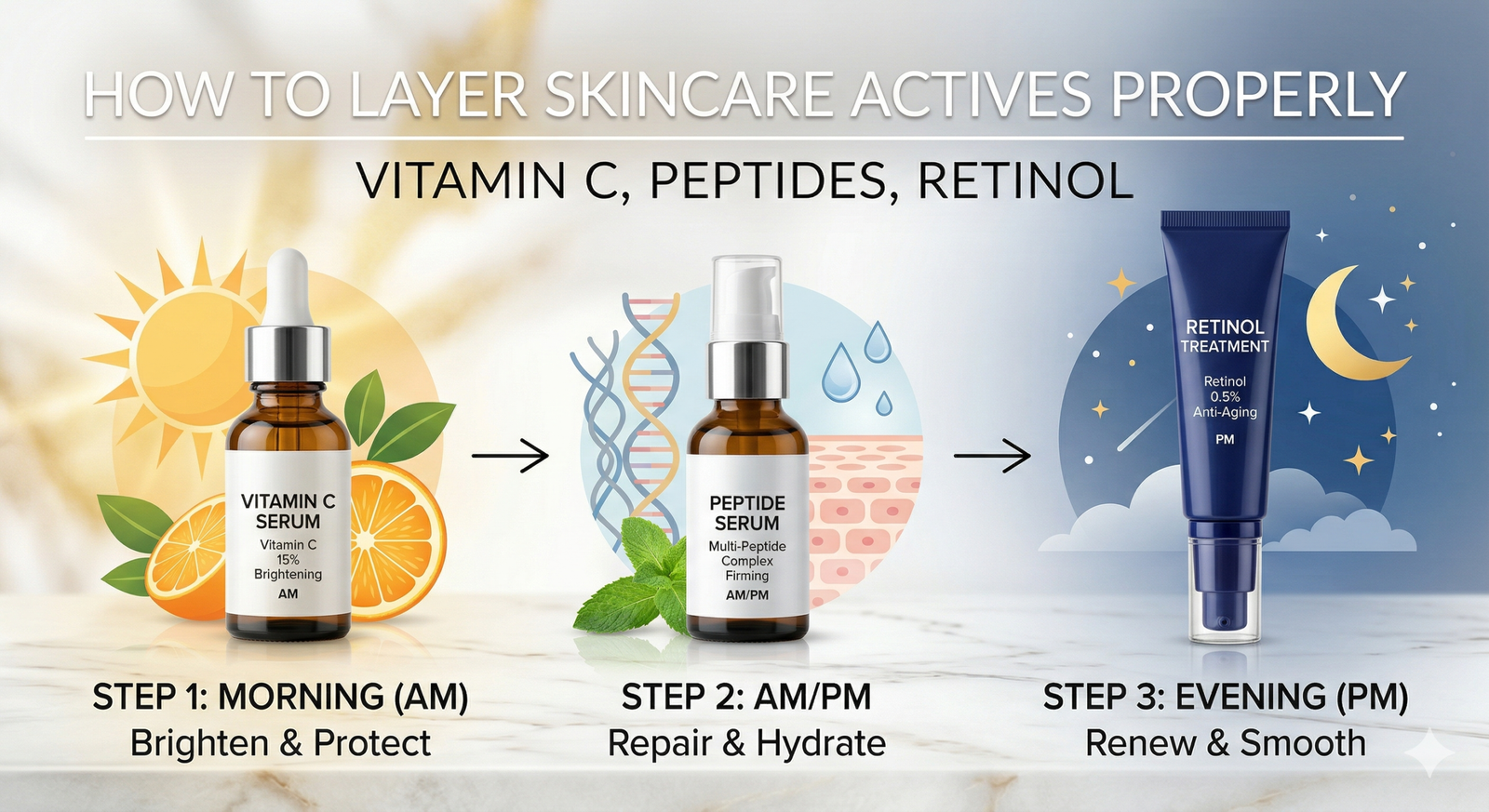
Layering skincare actives can feel confusing, especially when you want to use Vitamin C, Retinol, and Peptides in your routine. Each of these ingredients has strong benefits, but they also need careful placement to avoid irritation and maximize results. Many people make mistakes, like mixing the wrong actives or not waiting long enough between steps. If you want glowing, healthy skin, learning how to layer these actives properly is key.
Understanding Vitamin C, Retinol, And Peptides
Before you start layering, it’s important to know what each ingredient does. Vitamin C is an antioxidant that brightens skin and fights free radicals. It’s best for morning routines because it protects against sun damage. Retinol is a form of Vitamin A that speeds up cell turnover and reduces signs of aging, but it can cause dryness or irritation if used incorrectly. Peptides are short chains of amino acids that help rebuild skin and improve firmness. They are gentle and work well with many ingredients.
Using these three actives together can help with dark spots, wrinkles, and skin elasticity. However, their chemical properties mean you must layer them in a way that avoids irritation and allows each ingredient to work at its best.
The Correct Order To Layer Actives
The order you apply skincare actives matters because it affects how well they absorb. The general rule is to start with the thinnest product and end with the thickest. For these three actives, the ideal order depends on the time of day and your skin’s needs.
| Time of Day | Step 1 | Step 2 | Step 3 |
|---|---|---|---|
| Morning | Vitamin C Serum | Peptide Serum | Moisturizer + SPF |
| Night | Retinol Serum | Peptide Serum | Moisturizer |
Vitamin C should be used in the morning to protect your skin from environmental stress. Apply it right after cleansing, and let it absorb for 1-2 minutes. Next, apply Peptides to boost repair and calm your skin. Finish with moisturizer and always use sunscreen. For excellent options to add to your morning routine, check out our guide on the Best Vitamin C Serums for Hyperpigmentation & Glowing Skin.
Retinol is best at night because it can make your skin sensitive to sunlight. After cleansing, apply retinol and wait a few minutes. Follow with peptides, which help reduce irritation and support repair. End with a gentle moisturizer.

Credit: shop.getthetreatment.com
How To Layer Each Active Step-by-step
To layer these actives correctly, follow these simple steps:
- Cleanse your face with a gentle cleanser. This removes dirt and oil so the actives can absorb well.
- Apply Vitamin C serum in the morning. Use a few drops, pat gently, and wait until fully absorbed (1-2 minutes).
- Apply Peptide serum after Vitamin C. Peptides are flexible, so they can go after most actives.
- Moisturize to lock in hydration. Choose a moisturizer that suits your skin type.
- Apply sunscreen in the morning. This is non-negotiable when using Vitamin C and retinol.
- At night, switch Vitamin C for Retinol. Apply retinol first, wait 2-5 minutes, then layer peptide serum and moisturizer.
Practical Tips For Better Results
- Always patch test new products to check for reactions.
- Start with low concentrations of retinol to avoid irritation, especially if you’re new to it.
- Use Vitamin C (L-ascorbic acid) at 10-20% for best results.
- Wait at least 2 minutes after applying each active before adding the next.
- If your skin feels tight or stings, use peptides after retinol to calm it.
Key Differences Between Vitamin C, Retinol, And Peptides
Understanding how these actives work can help you make better choices for your skin. Here’s a quick comparison:
| Active | Main Benefit | Best Time to Use | Common Side Effects |
|---|---|---|---|
| Vitamin C | Brightening, antioxidant | Morning | Stinging, dryness |
| Retinol | Anti-aging, cell turnover | Night | Irritation, peeling |
| Peptides | Repair, firmness | Morning & Night | Rare irritation |
A non-obvious insight: Many people think retinol and Vitamin C cannot be used together. In fact, you can use them in separate routines (Vitamin C in the morning, retinol at night) without negative effects.

Credit: www.beautifulwithbrains.com
Common Mistakes When Layering Actives
Even experienced users make mistakes with actives. Here are some errors to avoid:
- Applying retinol and Vitamin C together: This can increase irritation. Always use them at different times.
- Skipping sunscreen: Both Vitamin C and retinol make your skin more sensitive to sunlight. Sunscreen is essential.
- Using too many actives at once: Start slow. If you’re new, try one active per routine and add more over time. If you are looking for potent options to build your routine, explore these Dermatologist-Recommended Anti-Aging Serums That Actually Work.
- Not waiting between steps: Applying products too quickly can reduce absorption and cause reactions.
- Using high concentrations immediately: Build tolerance by starting with lower strengths, especially for retinol.
Another insight: Peptides are often overlooked, but they can help calm irritation from retinol and support skin repair. This makes them a perfect partner for both Vitamin C and retinol routines.
How To Adjust For Sensitive Skin
If you have sensitive skin, layering actives needs extra care:
- Use retinol only 2-3 times a week.
- Choose Vitamin C derivatives (like sodium ascorbyl phosphate) which are less irritating.
- Always use peptides after retinol to reduce redness.
- Moisturize more often and avoid harsh exfoliants.
- Patch test every new product.
Sample Routine For Beginners
If you’re new to actives, here’s a simple routine to try:
Morning
- Gentle cleanser
- Vitamin C serum (10%)
- Peptide serum
- Moisturizer
- Sunscreen (SPF 30+)
Night
- Gentle cleanser
- Retinol serum (0.25% or 0.5%)
- Peptide serum
- Moisturizer
This routine balances results and safety. After 4-6 weeks, you can increase retinol strength if your skin adapts well.
Frequently Asked Questions
Can I Use Vitamin C And Retinol Together?
No, it’s best to use Vitamin C in the morning and retinol at night. Using them together increases irritation and reduces effectiveness.
How Long Should I Wait Between Applying Actives?
Wait 2-5 minutes between each active step. This allows absorption and reduces risk of irritation.
Are Peptides Safe For All Skin Types?
Yes, peptides are gentle and work for most skin types. They rarely cause irritation and can even help calm sensitive skin.
What Concentration Of Vitamin C Is Best?
For beginners, start with 10% Vitamin C. If your skin tolerates it, you can try up to 20%. Higher concentrations may sting or dry out skin.
Should I Use Sunscreen Every Day?
Absolutely. Both Vitamin C and retinol make your skin sensitive to sunlight. Use sunscreen (SPF 30+) daily, even when indoors.
Layering skincare actives doesn’t have to be complicated. With the right routine, you can enjoy brighter, smoother, and firmer skin. Always start slow, listen to your skin, and adjust as needed. If you want to learn more about scientific skincare, visit National Institutes of Health for research-backed information. Healthy skin is a journey—take your time and enjoy the process.
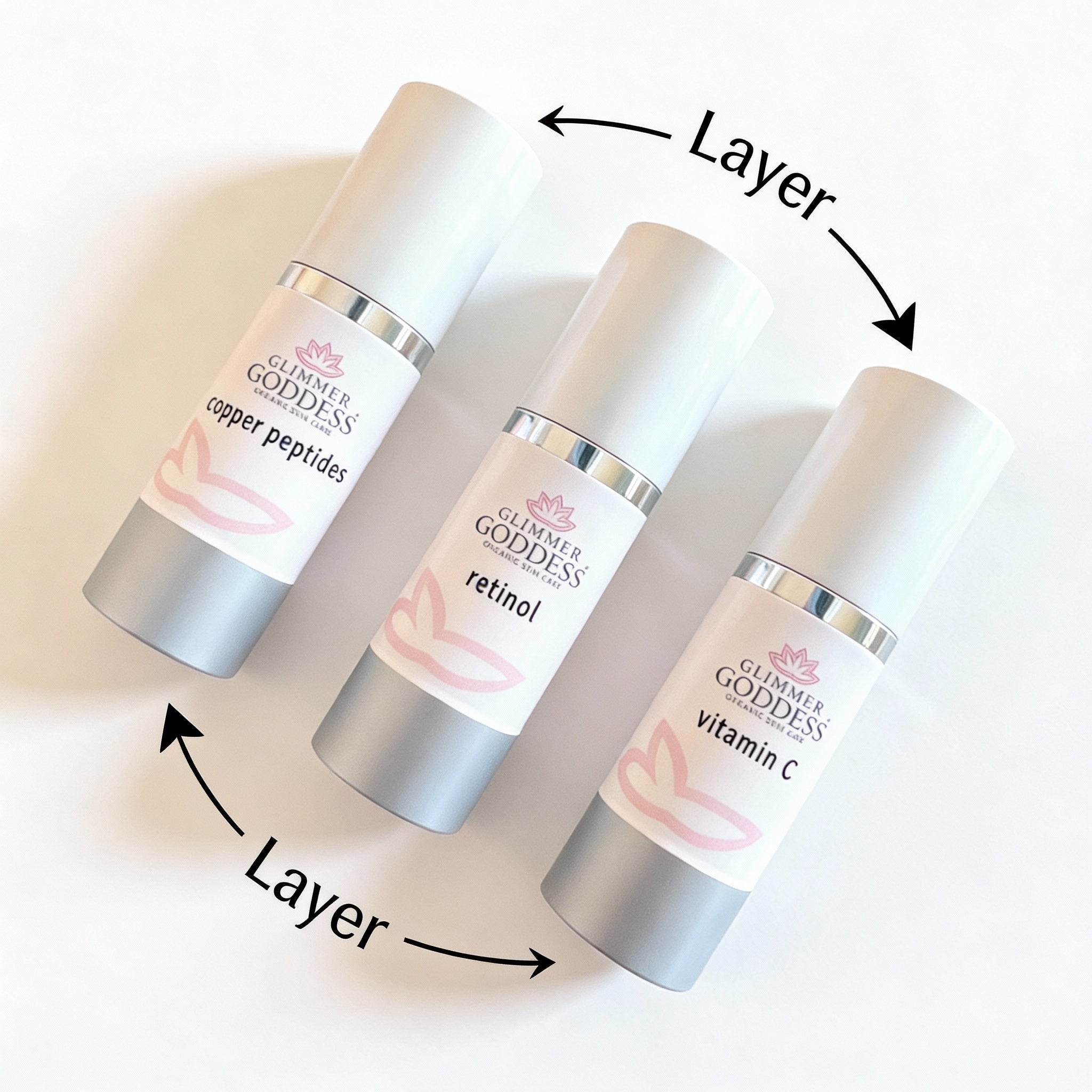
Credit: glimmergoddess.com