Jump To Section
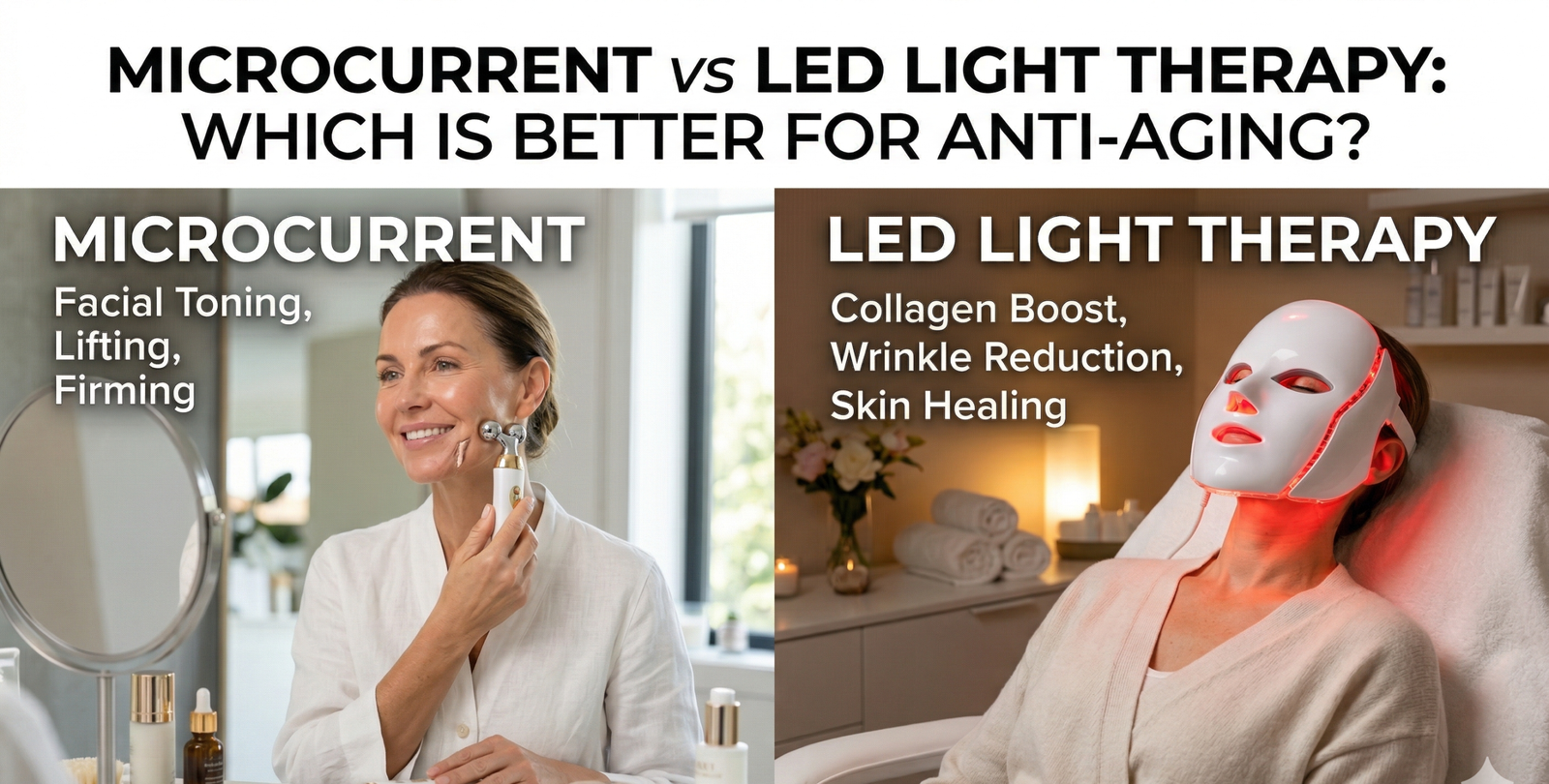
Many people searching for youthful, glowing skin come across two popular choices: microcurrent therapy and LED light therapy. Both are non-invasive treatments. They promise to reduce the signs of aging, like wrinkles and sagging. But is one truly better than the other? Making the right choice can save you time, money, and disappointment. Let’s break down how these therapies work, what makes them different, and how to decide which suits your skin goals best.
Understanding Microcurrent Therapy
Microcurrent therapy uses low-level electrical currents. These currents mimic the body’s natural electrical signals. The treatment involves placing two metal probes on the skin, which send gentle pulses to facial muscles.
Most sessions last 20–60 minutes. Many users report that the face looks more “lifted” and defined right after treatment. Over time, regular use can help:
- Improve muscle tone
- Reduce fine lines
- Boost skin firmness
This therapy is sometimes called a “natural facelift” because it targets the muscles under the skin, not just the surface.
How Microcurrent Slows Aging
Microcurrent therapy works by stimulating the facial muscles and boosting the production of adenosine triphosphate (ATP). ATP is like fuel for your cells. When you boost ATP, you help the skin create more collagen and elastin. These are the proteins that keep skin tight and smooth.
A 2012 clinical study found that microcurrent treatments increased the production of collagen by up to 14%. Elastin increased by around 48%. These changes lead to firmer, younger-looking skin over several weeks.
Not Just For Wrinkles
Besides reducing wrinkles, microcurrent can:
- Define cheekbones and jawline
- Lift droopy eyelids
- Improve circulation for a healthy glow
However, results are gradual. Most people need 8–12 sessions for best results, followed by monthly maintenance.
Exploring Led Light Therapy
LED light therapy uses different colors of light to target various skin concerns. Red and near-infrared lights are best known for their anti-aging effects. Blue light is often used for acne.
Unlike microcurrent, LED therapy does not use electricity to stimulate muscles. Instead, it works on a cellular level. The light energy penetrates the skin and triggers natural healing.
How Led Therapy Fights Aging
Red LED light (usually 630–700 nm wavelength) boosts collagen production and increases blood flow. This can smooth fine lines and improve skin texture.
A 2014 study published in Photomedicine and Laser Surgery showed that after 8 weeks of red LED therapy, 80% of participants saw improved skin tone and less visible wrinkles.
LED therapy is painless and safe for all skin types. Treatments are usually 15–30 minutes. Many people see noticeable results after 6–10 sessions.
Extra Benefits Of Led Therapy
LED light therapy can also:
- Reduce inflammation and redness
- Speed up healing after procedures
- Help with mild acne (blue light)
Unlike microcurrent, LED does not lift muscles or contour the face. Its strength is in improving the skin’s surface and health. If you are looking to incorporate this technology into your routine, we highly recommend exploring The 7 Best FDA-Cleared LED Light Therapy Masks for Anti-Aging.
Microcurrent Vs Led: Direct Comparison
To make things clearer, here’s a side-by-side look at the main differences.
| Feature | Microcurrent | LED Light Therapy |
|---|---|---|
| Main Action | Muscle stimulation | Cellular repair with light |
| Best For | Lifting, toning, firming | Smoothing wrinkles, brightening |
| Session Time | 20–60 minutes | 15–30 minutes |
| Pain Level | Painless, mild tingling | Painless |
| Results Timeline | Visible after 1–2 sessions, best after 8–12 | Visible after 3–4 sessions, best after 6–10 |
Which Therapy Is Safer?
Both treatments are generally safe. However, there are some differences to keep in mind.
| Therapy | Common Side Effects | Who Should Avoid |
|---|---|---|
| Microcurrent | Mild tingling, redness | Pregnant women, people with pacemakers, epilepsy |
| LED Therapy | Rare, sometimes mild irritation | People taking light-sensitive medications |
If you have sensitive skin or a health condition, always talk with your doctor before starting either therapy.

Credit: www.amazon.com
At-home Devices Vs Professional Treatments
Many at-home devices are now available for both therapies. Professional treatments are stronger, but home devices are popular for their convenience and lower cost.
| Type | Strength | Cost | Results |
|---|---|---|---|
| Professional Microcurrent | High | $100–$300 per session | Faster, more dramatic |
| At-Home Microcurrent | Low to medium | $200–$500 (device) | Gradual, subtle |
| Professional LED | High | $75–$150 per session | Faster, more visible |
| At-Home LED | Low to medium | $100–$400 (device) | Gradual, subtle |
Professional treatments give faster results, but require repeat visits. Home devices work slowly and need regular use—about 4–5 times a week. If you are also interested in long-term body treatments, consider looking into the Top Rated At-Home IPL Hair Removal Devices for Smooth Skin to round out your beauty gadget collection.
Common Mistakes People Make
Many beginners expect instant results after one session. In reality, both therapies need consistency for visible improvements. Another mistake is using devices incorrectly or too often, which can irritate the skin.
People also forget that hydration and sun protection are important for any anti-aging routine. No device can replace a good skincare foundation.
A non-obvious tip: If you combine both therapies, leave at least 24 hours between sessions to avoid overstimulating your skin.

Credit: www.fire.tas.gov.au
Which Is Better For Anti-aging?
The answer depends on your needs:
- If you want lifting and contouring, microcurrent is best.
- If your main goal is smoother skin and fewer wrinkles, LED light therapy is ideal.
- For a complete approach, many clinics and users combine both.
If you’re unsure, consult a dermatologist or skincare professional. They can help build a plan for your skin type and goals.
For more scientific details, visit this research paper on microcurrent and LED therapy.
Frequently Asked Questions
Is Microcurrent Or Led Light Therapy More Effective For Wrinkles?
Both can help reduce wrinkles. Microcurrent is better for lifting and tightening the skin. LED light therapy is better for improving skin texture and fine lines. The best results often come from using them together.
How Soon Will I See Results From Microcurrent Or Led Treatments?
Some people see a difference after one session, but most need 6–12 sessions for clear results. Home devices take longer than professional treatments.
Are These Therapies Safe For Sensitive Skin?
Yes, both therapies are gentle. However, always do a patch test first and follow device instructions. If you have a medical condition, talk to your doctor.
Can I Use Microcurrent And Led Therapy At The Same Time?
You can use both in your routine, but not during the same session. Wait at least 24 hours between treatments to avoid irritation.
Do At-home Devices Work As Well As Professional Treatments?
At-home devices are less powerful. They can give good results over time if used consistently, but professional treatments are stronger and work faster.
Choosing between microcurrent and LED light therapy depends on your goals and lifestyle. With patience and the right routine, both can help you achieve a more youthful look.

Credit: www.amazon.com