Jump To Section
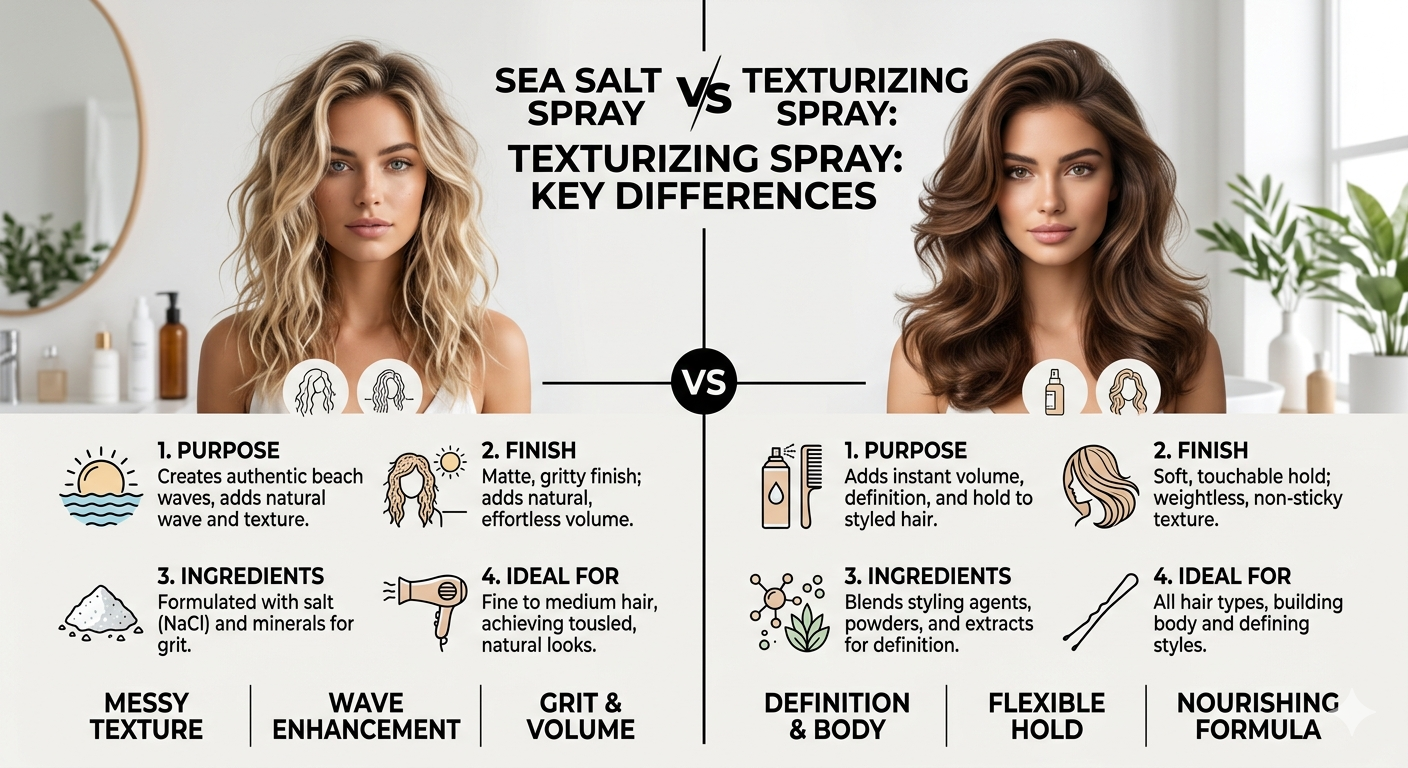
Sea salt spray and texturizing spray are two popular hair styling products. At first glance, they seem similar—both add volume and movement. But if you want the best results for your hair type and style, understanding their differences is essential.
This guide explains how they work, what makes each unique, and how to choose the right spray for your needs.
What Is Sea Salt Spray?
Sea salt spray is made with water and sea salt as the main ingredients. It mimics the effect of salty ocean air on hair, giving a tousled, beachy look.
Most sea salt sprays contain:
- Sea salt (adds texture)
- Water (base ingredient)
- Conditioning agents (reduce dryness)
- Essential oils or fragrance
When you spray it on damp or dry hair, the salt absorbs moisture, causing hair to look more matte and slightly rough. This effect works best for straight and wavy hair, creating natural waves and separation.
Example: If you want messy, surfer-style hair, sea salt spray is the go-to product.
What Is Texturizing Spray?
Texturizing spray is a broader category. It’s designed to add volume, grip, and separation without relying on salt. Ingredients can include polymers, starches, or silica, which coat each hair strand and create space between them.
Some sprays also add:
- Dry shampoo ingredients (for oil absorption)
- Hold agents (for longer-lasting styles)
- Shine enhancers or matte finishers
Texturizing spray is ideal for creating fuller hair, especially for fine or limp hair. It can also help updos and braids hold better by providing grip.
Example: If you want a voluminous blowout or a messy bun with staying power, texturizing spray is a smart choice.
Key Differences: Sea Salt Spray Vs Texturizing Spray
Both products create texture, but the results and ingredients are quite different. Here’s a clear comparison:
| Feature | Sea Salt Spray | Texturizing Spray |
|---|---|---|
| Main ingredient | Sea salt | Polymers, starches, silica |
| Best for | Wavy, straight hair | Fine, limp, all hair types |
| Finish | Matte, beachy | Matte or shiny, voluminous |
| Hold | Light | Medium to strong |
| Moisture effect | Can dry hair | Usually gentle |
Main ingredient
Best for
Finish
Hold
Moisture effect
Non-obvious insight: Sea salt spray is less ideal for very dry or damaged hair, since salt draws out moisture and can make hair brittle. Texturizing spray is more versatile and safer for frequent use.
How They Work: Science And Results
Sea Salt Spray
Salt crystals bind to the hair cuticle, roughening the surface. This makes hair strands separate and creates a “piecey” texture. The salt also absorbs natural oils, leaving a matte finish.
Stat: Surveys show 68% of users notice more waves after using sea salt spray, but 34% report increased dryness.
Texturizing Spray
Polymers and starches form a thin layer on each strand, lifting hair away from the scalp. This creates volume and makes styling easier. Some formulas contain ingredients similar to dry shampoo, so they help with oil control.
Stat: Texturizing sprays can increase hair volume by up to 40% in clinical tests.
| Effect | Sea Salt Spray | Texturizing Spray |
|---|---|---|
| Texture | Rough, separated | Soft, lifted |
| Volume | Moderate | High |
| Oil Control | Minimal | Strong (in dry shampoo versions) |
| Wave Enhancement | Strong | Weak |
Texture
Volume
Oil Control
Wave Enhancement
Choosing The Right Spray For Your Hair
Your hair type and styling goals are the most important factors. Here’s a simple guide:
- Wavy or straight hair: Sea salt spray helps create natural waves and a beachy look.
- Fine or limp hair: Texturizing spray adds fullness and grip, making hair look thicker.
- Dry or damaged hair: Avoid sea salt spray. Choose a moisturizing texturizing spray.
- Updos or braids: Texturizing spray holds styles in place and prevents slipping.
- Oily scalp: Texturizing sprays with dry shampoo ingredients control excess oil.
Common mistake: Many people use sea salt spray daily, causing dryness. Limit use to 2–3 times per week for healthy hair.
Application Tips
- Always shake the bottle before use.
- Apply sea salt spray to damp hair, then scrunch and air dry.
- Apply texturizing spray to dry hair for best volume.
- Don’t overuse—too much product can weigh hair down.
Non-obvious tip: For maximum results, layer sea salt spray under texturizing spray. This creates both wave and volume, but only for special occasions. Daily layering increases buildup.
| Step | Sea Salt Spray | Texturizing Spray |
|---|---|---|
| When to apply | Damp hair | Dry hair |
| How to style | Scrunch or twist | Lift roots, tousle |
| Ideal frequency | 2–3 times/week | Daily (if gentle) |
When to apply
How to style
Ideal frequency
Which Spray Is Better For You?
Neither product is strictly “better”—it depends on your hair and goals.
- If you want waves and texture, use sea salt spray.
- For volume and grip, choose texturizing spray.
- Try both, but watch for dryness or buildup.
Many stylists recommend having both sprays in your routine for flexibility. For more in-depth product science, visit Wikipedia.
Frequently Asked Questions
Is Sea Salt Spray Safe For Colored Hair?
Sea salt spray can fade color faster, especially with frequent use. If you color your hair, use a spray with added conditioners and limit use.
Can I Use Texturizing Spray On Curly Hair?
Yes. Texturizing sprays work well for curly hair, adding volume and separation without changing the curl pattern.
How Often Should I Use Sea Salt Spray?
2–3 times a week is best for most hair types. Daily use can cause dryness and breakage.
Will Texturizing Spray Make My Hair Stiff?
Most modern formulas are lightweight and flexible. Older sprays with high polymer content might cause stiffness, so choose newer products.
Can I Use Both Sprays Together?
Yes, but only for special looks. Layer sea salt spray for waves, then texturizing spray for volume. Avoid daily layering to prevent buildup.
Sea salt spray and texturizing spray are both powerful styling tools. Knowing their differences helps you choose the right product for your hair and avoid common mistakes. Try each, adjust for your needs, and enjoy better styling with confidence.