Jump To Section
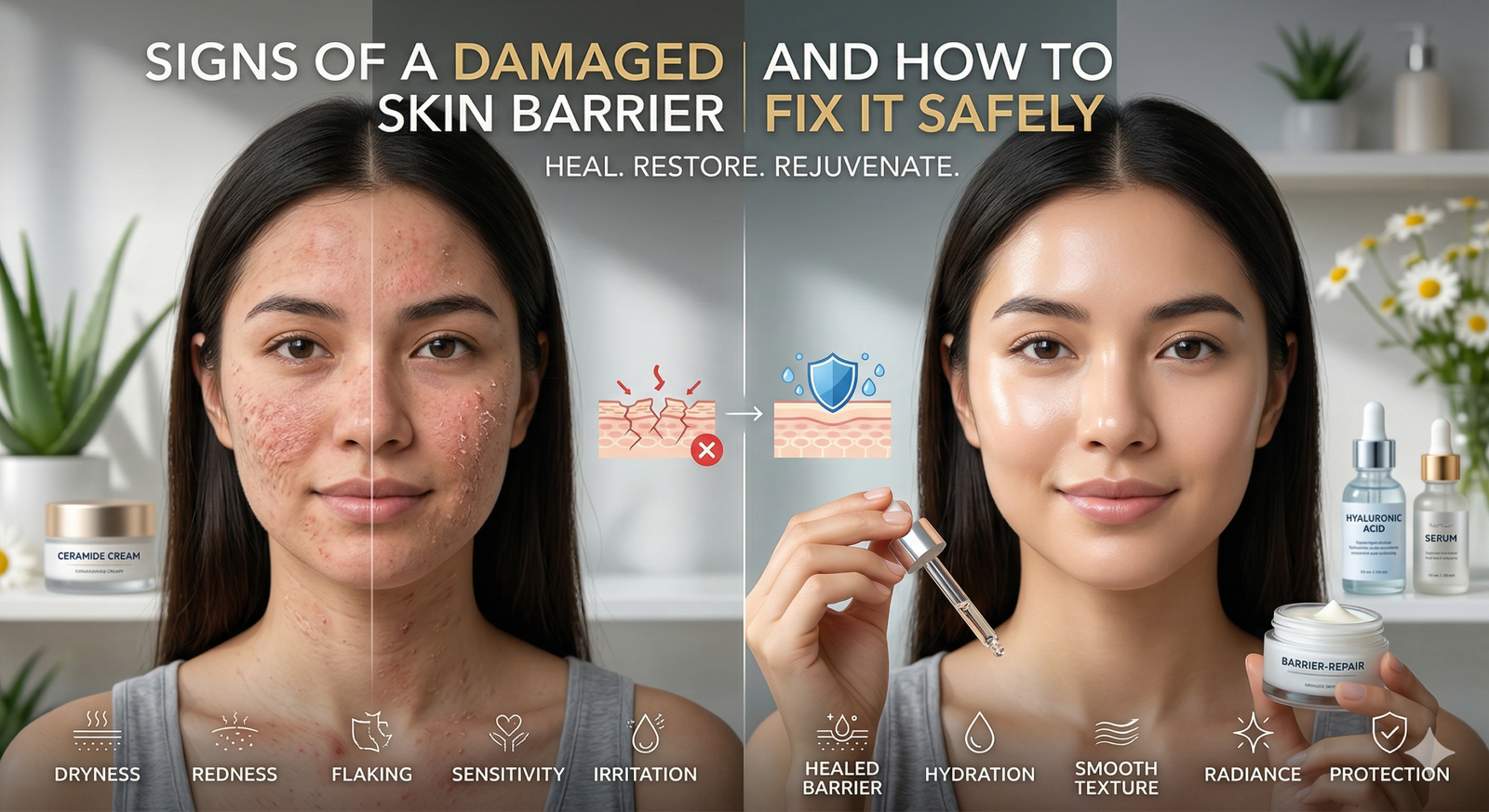
Many people struggle with skin that feels dry, irritated, or just doesn’t look healthy. Often, the reason is a damaged skin barrier. If you don’t know what this is, you’re not alone. The skin barrier is the outermost layer of your skin. It works like a shield, protecting you from pollution, germs, and moisture loss. When it’s damaged, your skin shows clear signs—and fixing it safely is possible, but only if you know what to do.
Signs Of A Damaged Skin Barrier
Recognizing the problem is the first step. A damaged barrier doesn’t just make your skin look dull; it can cause discomfort and long-term issues. Here are the most common signs to watch for:
1. Persistent Dryness
Skin that stays dry no matter how much moisturizer you use is a classic sign. Even oily skin can feel dry when the barrier is broken.
2. Redness And Inflammation
Visible redness, especially after washing your face, means the barrier is not protecting you well.
3. Flakiness And Peeling
If your skin flakes or peels, especially around the nose, cheeks, or chin, the barrier is likely compromised.
4. Increased Sensitivity
Skin that reacts to products it used to tolerate—like burning, stinging, or itching—is often damaged.
5. Breakouts And Irritation
Unexpected pimples, rashes, or irritated patches can appear when the barrier lets bacteria and irritants in.
6. Tightness After Cleansing
Feeling tight or uncomfortable after washing your face (even with gentle cleansers) is a signal.
7. Dull, Uneven Tone
Healthy skin glows. Damaged skin looks tired, grayish, or uneven.
8. Delayed Healing
Small wounds or pimples take longer to heal because the protective layer is weak.
Many beginners miss that multiple signs can appear at once. For example, you might have both flakiness and breakouts. Also, symptoms can switch quickly—one week you feel dry, the next you break out. This makes barrier damage tricky to spot.
What Causes Skin Barrier Damage?
Knowing what harms the skin barrier helps you avoid mistakes. Here are the main causes:
- Over-cleansing: Washing your face too often or using harsh cleansers strips away natural oils.
- Excess exfoliation: Scrubs, acids, or peels used too much or too often break down the barrier.
- Environmental stress: Pollution, cold weather, wind, and UV rays weaken the skin.
- Wrong products: Alcohol-based toners, strong fragrances, or high pH products disrupt the balance.
- Stress and poor sleep: Both affect skin repair and resilience.
- Hot showers: Heat removes protective oils, making skin vulnerable.
- Underlying conditions: Eczema, rosacea, and dermatitis weaken the barrier.
A non-obvious insight: mixing too many actives (like retinol, vitamin C, and acids together) is a common mistake. Even if each product works alone, combining them can overload your skin.

Credit: glimmergoddess.com
How To Fix A Damaged Skin Barrier Safely
Restoring your skin barrier needs patience and care. Quick fixes often make things worse. Follow these steps for safe recovery:
1. Stop Harmful Habits
Pause all exfoliation, scrubs, and strong actives (like retinol or AHAs). Switch to gentle cleansing—just once daily. Avoid hot water.
2. Simplify Your Routine
Less is more. Use a mild cleanser, a fragrance-free moisturizer, and sunscreen during the day. Skip toners and serums for now.
3. Choose Barrier-friendly Products
Look for ingredients proven to support the barrier:
- Ceramides: Help rebuild the protective layer.
- Fatty acids: Restore moisture.
- Cholesterol: Essential for barrier strength.
- Hyaluronic acid: Draws water into the skin.
Here’s a simple comparison of common barrier-repair ingredients:
| Ingredient | Main Benefit | Found In |
|---|---|---|
| Ceramides | Strengthen barrier | Moisturizers |
| Fatty acids | Moisture retention | Face oils |
| Hyaluronic acid | Hydration | Serums, creams |
| Cholesterol | Barrier repair | Special creams |
4. Protect Your Skin Daily
Wear a broad-spectrum sunscreen every morning—even inside. UV rays damage the barrier quickly. Physical sunscreens (with zinc oxide) are gentler. If you need a cosmetic-elegant option, consider checking our list of the 10 Best Invisible Facial Sunscreens for All Skin Types (2026).
5. Hydrate Inside And Out
Drink enough water. Use a humidifier if your room is dry. Apply moisturizer to damp skin to lock in water.
6. Avoid Triggers
Skip products with alcohol, strong fragrances, and harsh chemicals. If you live in a polluted city, wash your face gently at night.
7. Be Patient
Barrier repair can take 2–6 weeks. Don’t rush the process. If symptoms worsen, see a dermatologist.
8. Introduce Actives Slowly
Once your skin feels normal, add one active at a time. Wait a week before adding another. This prevents overload. When your skin barrier is fully healed and you are ready to incorporate powerful anti-aging ingredients again, you might explore these Dermatologist-Recommended Anti-Aging Serums That Actually Work.
A second insight beginners miss: patch testing is crucial. Before using a new product, apply a small amount behind your ear for three days. If there’s no reaction, it’s safer to use.
Here’s a helpful comparison of different skincare routines for damaged and healthy skin:
| Routine Step | Damaged Barrier | Healthy Barrier |
|---|---|---|
| Cleansing | Mild, once daily | Normal, twice daily |
| Moisturizing | Rich, fragrance-free | Light, as needed |
| Actives | None | Retinol, acids, vitamin C |
| Sunscreen | Daily | Daily |
How Long Does Skin Barrier Repair Take?
Most people see improvement in 2–6 weeks. Severe damage may take longer. If your symptoms don’t improve after two months, consult a skin specialist. According to dermatology studies, up to 40% of adults experience barrier issues at some point. Patience and consistency are key.

Credit: www.medik8.com.au
Practical Tips For Faster Recovery
- Sleep 7–8 hours nightly. Skin repairs itself during sleep.
- Eat foods rich in omega-3 fatty acids (like salmon, walnuts, or chia seeds).
- Avoid touching your face during the day.
- Use lukewarm—not hot—water for cleansing.
- Don’t pick at flaky or irritated skin.
For more details on skin barrier science, you can visit Wikipedia.
Frequently Asked Questions
What Is The Skin Barrier?
The skin barrier is the top layer of your skin, called the stratum corneum. It protects against germs, pollution, and moisture loss.
Can I Use Exfoliating Acids If My Skin Barrier Is Damaged?
No. Avoid all acids and scrubs until your skin feels normal again. These can make damage worse.
How Do I Know If My Moisturizer Supports Barrier Repair?
Look for ingredients like ceramides, fatty acids, and cholesterol. Avoid strong fragrances and alcohol.
Is Sunscreen Important For Barrier Repair?
Yes. Sunscreen prevents UV damage, which slows healing. Choose gentle formulas with zinc oxide or titanium dioxide.
Should I See A Dermatologist For Skin Barrier Damage?
If symptoms persist longer than 6 weeks or worsen, it’s best to see a professional. They can recommend the right treatments and check for other skin problems.
Taking care of your skin barrier is vital for healthy, comfortable skin. By recognizing the signs, avoiding common mistakes, and following safe recovery steps, you can restore your skin’s natural strength. Remember, healing takes time—but with patience and the right approach, your skin will thank you.
Credit: www.drsoodaesthetics.com