Jump To Section
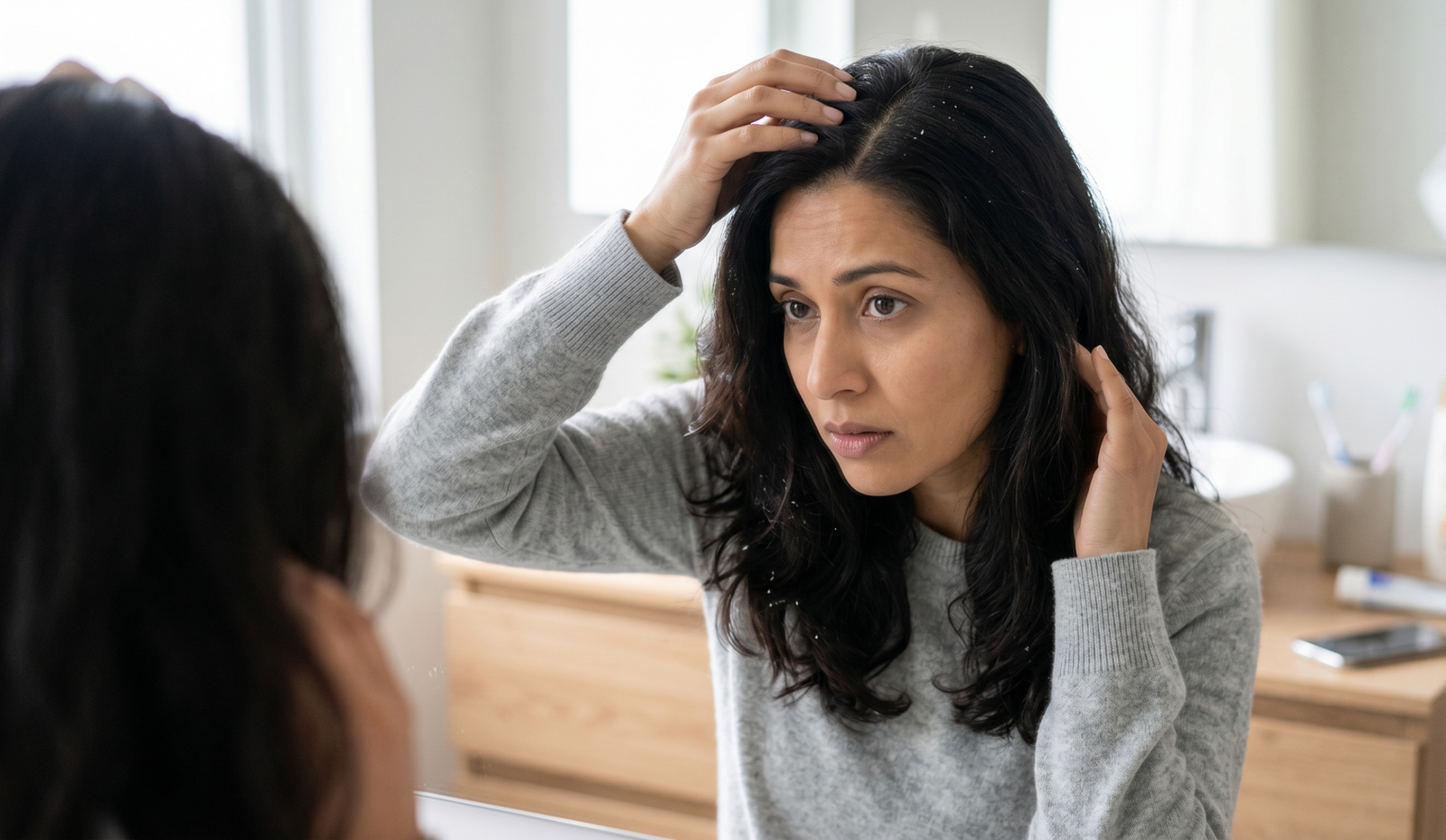
Many adult women notice sudden dandruff at some point in their lives. It can feel embarrassing and confusing, especially if your scalp was clear before. While dandruff is a common issue, its sudden appearance often signals changes in your health, habits, or environment. Understanding what triggers this can help you manage it quickly and prevent it from returning.
Common Causes Of Sudden Dandruff In Adult Females
Hormonal Changes
Hormones affect many parts of your body, including your scalp. Sudden hormonal shifts can lead to excess oil production, which feeds the fungus responsible for dandruff. Women may experience this:
- During menstruation
- Around menopause
- After starting or stopping birth control
A study found that women are more likely to develop scalp issues during hormonal changes, especially when estrogen levels drop.
Stress And Lifestyle Factors
High stress levels can trigger dandruff by weakening your immune system. When your body is stressed, it produces more oil and sweat, creating an ideal environment for dandruff-causing microbes.
Lifestyle changes, like moving to a new city or starting a demanding job, often increase stress and disrupt normal routines, including hair care.
Product Reactions
Switching hair products suddenly can irritate your scalp. Ingredients like sulfates, alcohol, and strong fragrances may dry out your scalp or cause allergic reactions. If you recently changed shampoos, conditioners, or styling products, this could be the cause.
Weather And Environmental Changes
Dry winter air or sudden humidity can impact your scalp. Cold weather dries out the skin, while humid conditions promote oil and sweat. Both extremes can trigger dandruff unexpectedly.
Medical Conditions
Some health issues can cause sudden dandruff:
- Seborrheic dermatitis: A chronic skin disorder that causes flaky, itchy scalp.
- Psoriasis: An autoimmune disease that may cause thick, silvery scales.
- Fungal infections: Malassezia fungus is a main culprit behind dandruff.
If dandruff is severe or does not improve, a medical condition might be the cause.
How To Identify The Root Cause
Finding out why you have sudden dandruff can be tricky. Here’s a quick comparison to help you pinpoint the likely trigger:
| Cause | Typical Signs | What to Check |
|---|---|---|
| Hormonal Changes | Oily scalp, timing with periods or menopause | Recent hormonal shifts |
| Stress | Flare-ups during busy times | Life events, sleep quality |
| Product Reaction | Redness, itching after product use | New hair products |
| Weather | Dryness or oiliness, seasonal changes | Temperature, humidity changes |
| Medical Conditions | Persistent flakes, thick patches | Other skin symptoms |
Hormonal Changes
Stress
Product Reaction
Weather
Medical Conditions

Non-obvious Insights Most Women Miss
- Scalp hygiene is more important than hair cleanliness. Washing hair without focusing on the scalp leaves oil and dead skin behind.
- Dietary changes can affect dandruff. A sudden drop in nutrients like zinc or vitamin B can worsen scalp issues, even if your hair care routine stays the same.
Many overlook these factors, believing dandruff is only about shampoo or weather.
Practical Steps To Control Sudden Dandruff
Review Your Routine
Check for any recent changes in hair products or styling habits. If you started using a new shampoo or dye, stop and see if the flakes improve.
Manage Stress
Try simple stress-reducing activities:
- Deep breathing for 5 minutes daily
- Short walks outside
- Limiting caffeine
Even minor stress relief can reduce scalp flare-ups.
Adjust Hair Washing
Avoid washing your hair too frequently or too rarely. Aim for every 2-3 days, focusing on massaging the scalp.
Choose The Right Shampoo
Look for shampoos with zinc pyrithione, salicylic acid, or ketoconazole. These ingredients fight dandruff-causing microbes. Here’s a quick ingredient comparison:
| Ingredient | Main Benefit | Best For |
|---|---|---|
| Zinc Pyrithione | Reduces fungus | Mild to moderate dandruff |
| Salicylic Acid | Removes flakes | Dry scalp |
| Ketoconazole | Strong antifungal | Severe dandruff |
Zinc Pyrithione
Salicylic Acid
Ketoconazole
Protect Your Scalp
Wear a hat in harsh weather and avoid hot showers, which dry out the scalp.
When To See A Doctor
If your dandruff:
- Lasts more than two weeks
- Gets worse despite home treatment
- Comes with pain, bleeding, or thick patches
You may need a dermatologist. Persistent dandruff could be a sign of conditions like psoriasis or seborrheic dermatitis.
Real-world Example
Sarah, age 35, noticed sudden dandruff after moving from California to New York. She was stressed, using a new shampoo, and experiencing winter for the first time. By switching to a gentle shampoo, improving scalp hygiene, and managing stress, her dandruff improved in two weeks.
Frequently Asked Questions
Why Do I Suddenly Have Dandruff When I Never Had It Before?
Sudden dandruff often happens after changes in hormones, stress, hair products, or weather. Even if you never had it, your scalp can react to new conditions.
Can Diet Cause Sudden Dandruff?
Yes. A lack of zinc, vitamin B, or essential fats can trigger scalp issues. Eating a balanced diet helps prevent flakes.
Should I Wash My Hair Every Day To Control Dandruff?
No. Washing daily can dry out your scalp and make dandruff worse. Try washing every 2-3 days and focus on the scalp.
Is Dandruff Contagious?
No. While the Malassezia fungus causes dandruff, it’s a natural part of the scalp. Dandruff is not spread from person to person.
What’s The Best Shampoo For Sudden Dandruff?
Choose a shampoo with zinc pyrithione, salicylic acid, or ketoconazole. These ingredients are proven to reduce flakes. For more details, see American Academy of Dermatology.
Feeling confident with the right information helps you control sudden dandruff. If you pay attention to scalp health, manage stress, and use gentle products, most cases improve quickly. If problems continue, a dermatologist can help you find the cause and the best treatment.